Well, obviously no. Stewart Island is visible and the South Pole is 4,810 kilometers away. Once upon a time, if you were traveling on a ship from Scotland, Ireland or England, it felt like the end of the world.
One morning around 10 a.m. I enjoyed a coffee and piece of cake at Land’s End restaurant and inn at Stirling Point, at the southernmost tip of South Island, New Zealand.
At the moment the sea is rough and a shower just passed through. Last night in nearby Invercargill it hailed–laying a temporary white carpet on the parking lot. Now I am second guessing myself. Am I being sensible or a wuss for not getting on a small plane and spending the day on Stewart Island? (I do not even consider the ferry. Read Trip Advisor–it is all compliments for the crew putting up with passengers vomiting all round.) I tell myself, given I will be cycling 27 miles the next day, I cannot afford to get seasick or airsick. And the helicopter service relocated to Stewart Island and I could not reach them via the website.
So I sit by the window and enjoy a flat white and watch as a procession of people drive up to Stirling Point and take selfies with the sign. What pose shall I strike?
In the 2014 edition of The Best American Travel Writing, editor Paul Theroux sneers, “…in general what they call travel is in most cases a superior and safe holiday.” As I gaze at the sea and its white caps, the “open” sign flapping the in the wind, I am tormenting myself. Am I on a safe holiday or am I an adventurer? The previous morning I was sitting on a drenched beach with the rain dripping off my nose onto my camera, patiently waiting for a Fiordland penguin to emerge from the rainforest. The following day I plan to set off from Clyde to mountain bike 150 kilometers to Middlemarch (over 4 days). Today I choose to conserve financial and physical resources and have a second flat white and slice of lemon cake.
The people who are posing at the end of the world: are they tourists or travelers? I prefer not to judge. Instead I smile at their choice of pose.
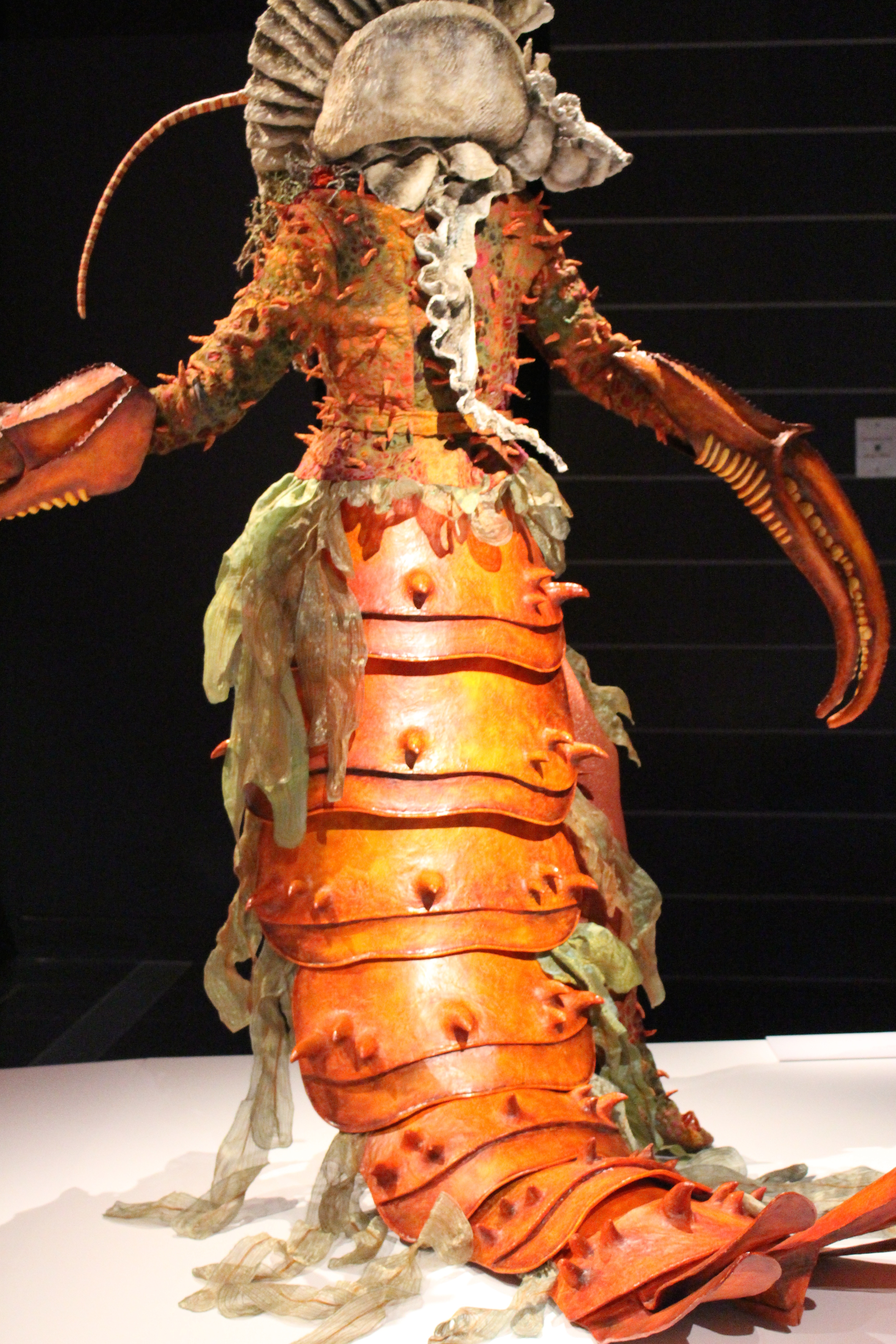
This is the detail of the Grand Award winner from 2014 WOW.
I love, love, love the World of Wearable Art. It is a show, an inspiration, a collection of amazing “garments” and more. A year ago I traveled with my friend UK Sarah to see the show in Wellington. On this visit to Auckland I was able to share the amazing craft that is WOW with my adult children at the Auckland War Memorial and Museum’s exhibit.
The catwalk at the WOW exhibit allows you to see some of the best designs from various years.
You can take any one of the amazing dresses or bras or other creations and marvel at the design, construction and whimsey for a long time. This exhibit allows you to linger as long as you want AND to get up close and personal (without touching).
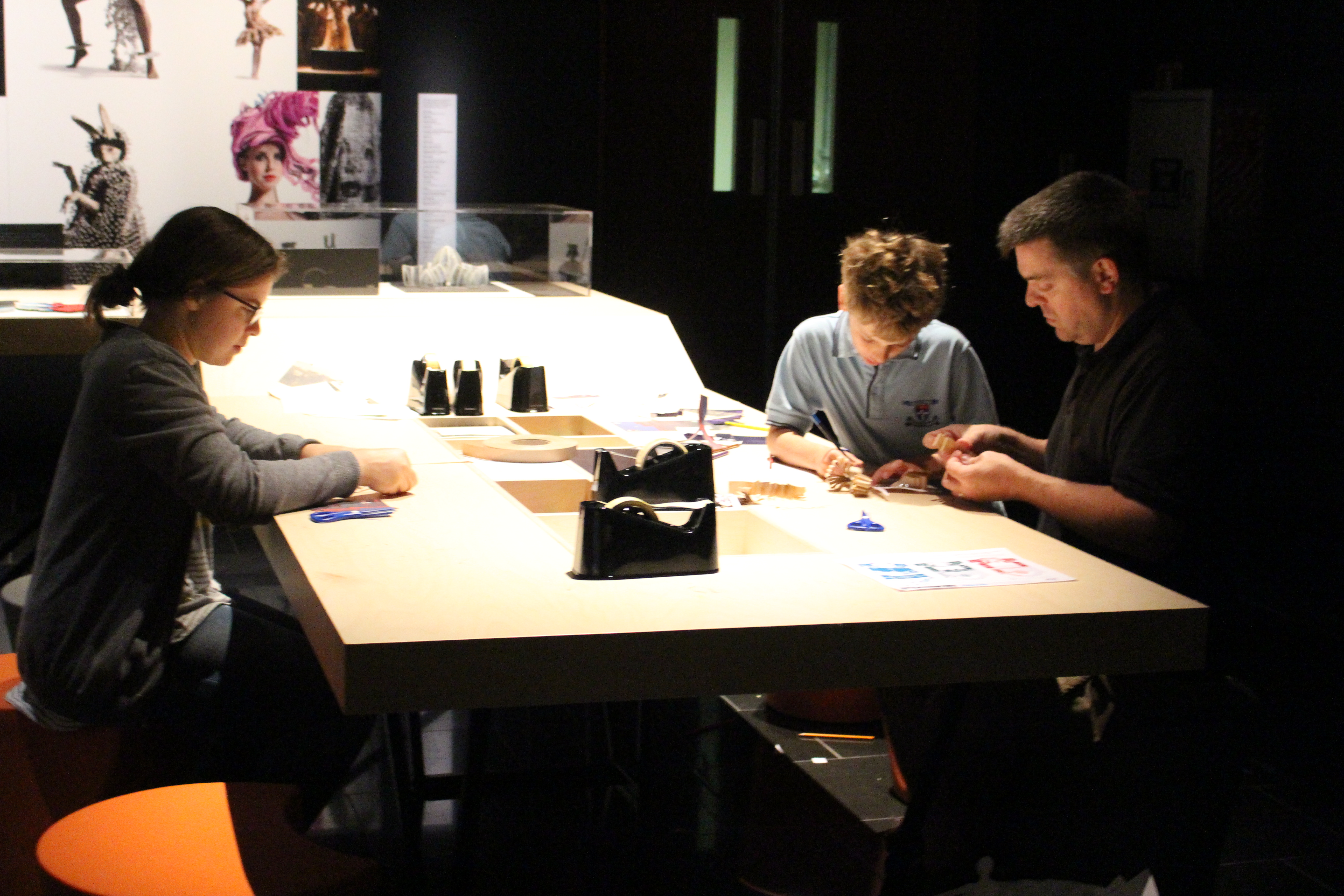
Or you can create your own WOW inspired paper doll and add it to the wall in the exhibit.
The Auckland Museum is located in the Domain near Parnell in Auckland. Open daily from 10 a.m. to 5 p.m. Admission is $25 per adult and $10 per child. The WOW exhibit is included with admission. Also worth checking out: the Maori Experience (musical performances), the cafe, and the gift shop for quality gifts made in New Zealand.
I have been traveling to New Zealand at least once a year since 2010 and I am still impressed by the evidence of creativity in all aspects of life. From the foam designs on my flat white to urban design to this exhibit at the Auckland Art Gallery.
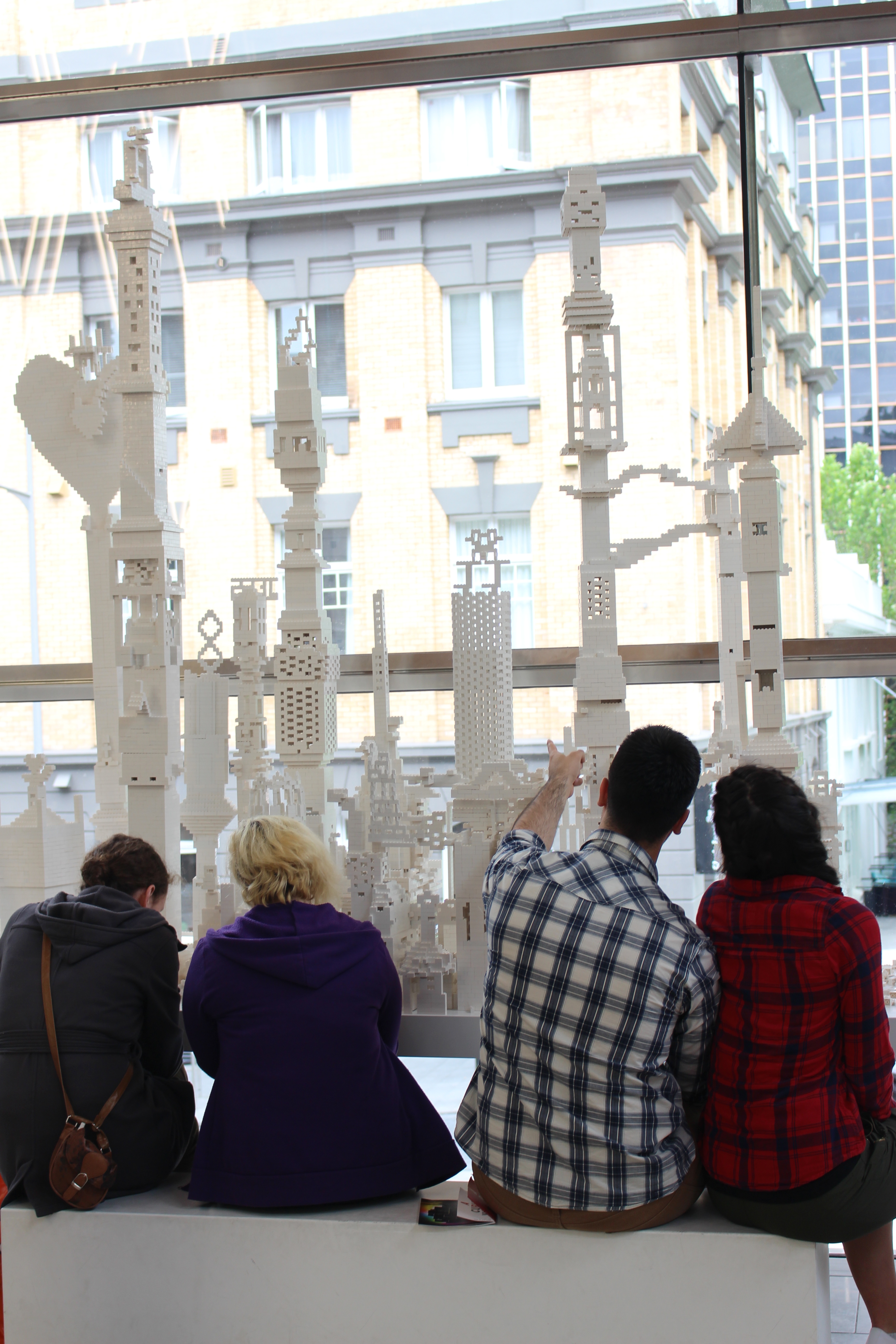
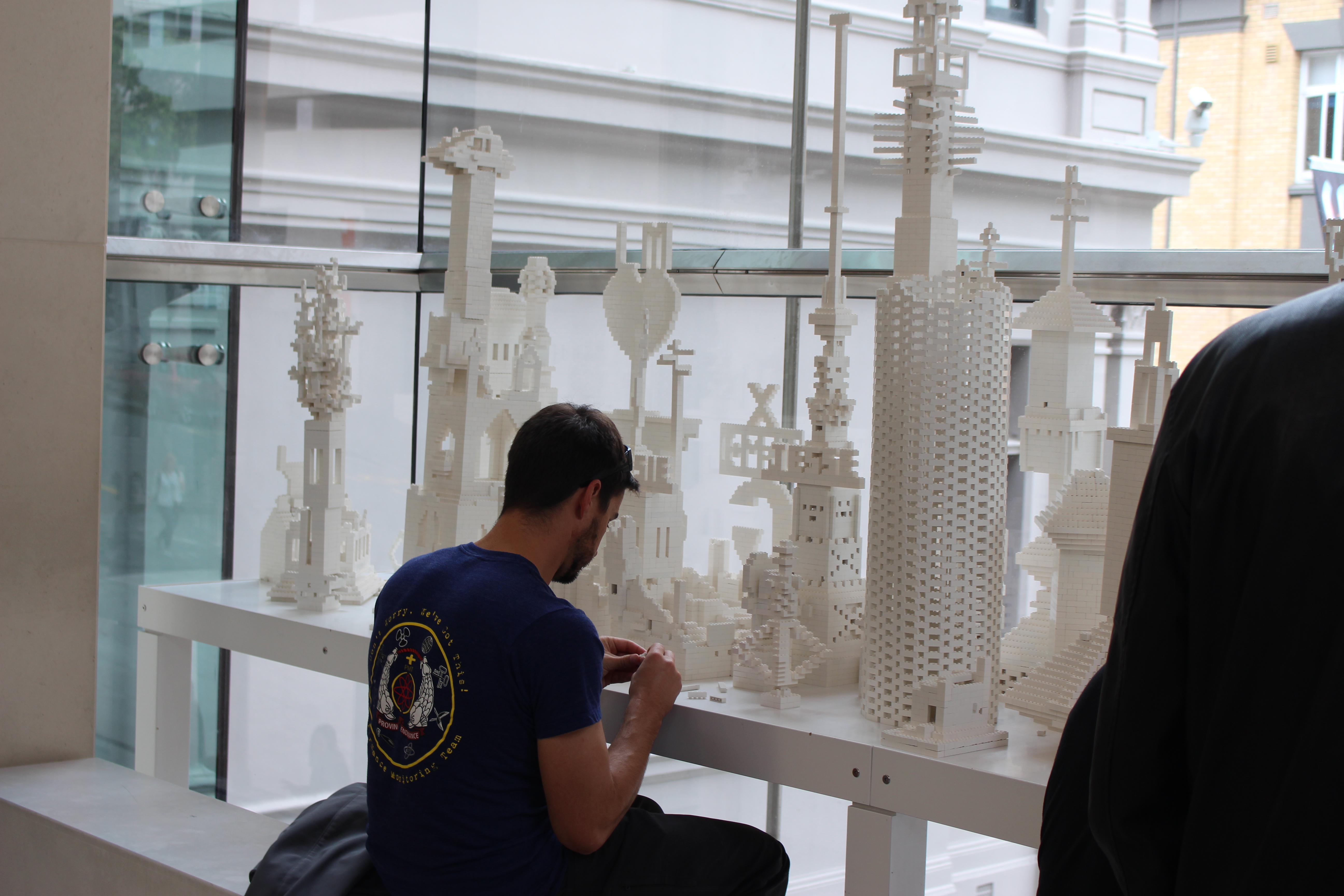
Participate in this art work in progress at the Auckland Art Gallery.
On the Mezzanine, dedicated to international contemporary art, visitors were invited to participate in “The cubic structural evolution project,” by Danish artist Olafur Eliasson. As the Gallery highlights pamphlet states, “Experience the subtle re-creation of the cheek-to-jowl tensions of city living, as you consider whether your neighbour will build bigger, better or higher than you, and whether it’s okay to modify or destroy their work.”
The Auckland Art Gallery is open daily from 10 a.m. to 5 p.m. Admission is free although sometimes special exhibits have a charge for entry. The gallery is located in the heart of downtown and offers access to Albert Park. The cafe offers affordable and tasty lunch and snack options.
I am on an ambitious road trip on the South Island of New Zealand. First I flew to Queenstown and drove north to view penguins at the Wilderness Lodge in Lake Moeraki about 30 miles north of Haast. The drive over the Crown Range and through Wanaka immersed me in beauty. I found myself pushing to get to the Lodge for the 7:30 p.m. dinner AND stopping frequently to take pictures.
So frequently I got to meet Rohan and Dhaval who stopped at three scenic stops with me. Dhaval took this picture of me.
On Friday there were lots of work crews repairing rock slides and slumps. It is spring time in New Zealand so it time to repair winter damage. New Zealand keeps miles and miles of roads in good shape–a lot per capita–only 1.5 million people on South Island. Highway 6 goes from Invercargill to Queenstown and then on to Franz Joseph National Park and beyond. To conserve resources they use one lane bridges and one side gives way and waits if there is someone coming from the other direction. It is a bit unnerving at first, then I realized that I hardly ever actually encountered another car when I approached one of these bridges. One exception is the bridge just outside Frankton and Queenstown Airport. It has a light and there are cars waiting, but the scariest part is the spotty surface. The tarmac is worn away.
Cattle crossings are called Cattle stops.
Then there are the different signs. My least favorite: “Drive with Care, Accident Black Spot”. I am not sure what it indicates except it cannot be good.
Then there are the switchbacks, just out of Arrowtown, so severe my GPS thought I had done a u-turn.
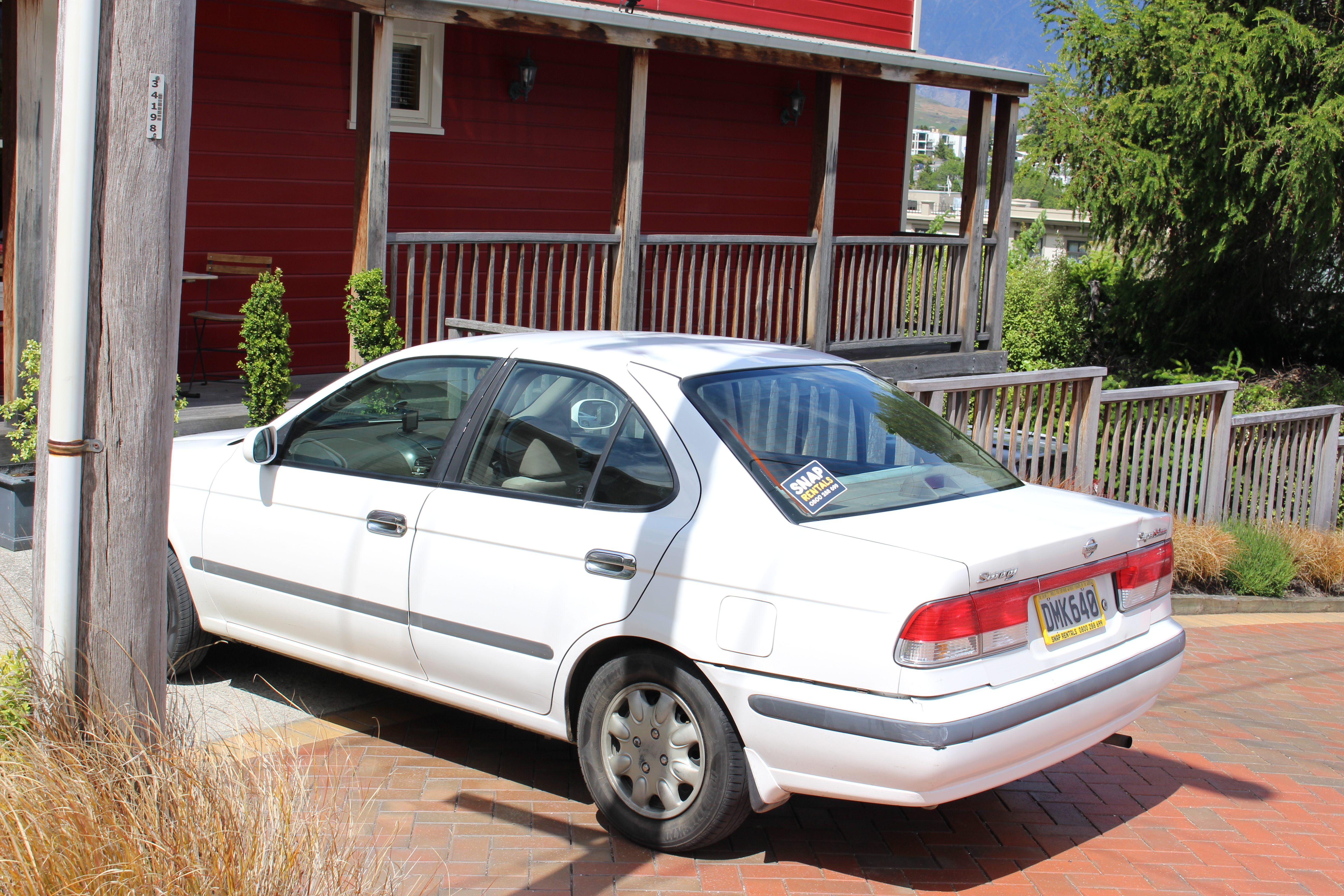
I rented a very affordable car (saving money for accommodation) from Snap Rentals in Qtown. It is the same Nissan we drove in Auckland except it has 247,000 km and the seats are broken down and the radio does not work. It did the job and with the excess insurance I did not have to worry about the loose gravel and other road hazards.
I drove through lots of rain showers. The weather was the most severe in Invercargill. Fortunately I had dashed into hotel reception before the heavy hail started to fall.
I love noticing uniquely New Zealand things. On the way out of Invercargill I saw recycled feed sacks full of “Horse Poo $2”. Just leave the money by the stand on the honor system. There are numerous roadside picnic spots. And they call it freedom camping when you can stop your self-contained camper on the side of the road.
I am glad to be moving to a bicycle tomorrow. My neck and back were so sore I called Matt at The Dairy Private Hotel to book me a massage. Juliana at Body Sanctum in Qtown did an amazing job. I am undoing her good work as I lean over my computer to write. (straighten up!) Also glad to finally have a decent internet connection. I have a lot to share. Stay tuned.
When the New Zealand All Blacks rugby team descending on Chitown for a test match with the USA Eagles a large number of Kiwis living abroad in the USA and Canada gathered. Walking around the Chicago Loop, an adventurer could hear many men and women speaking with the softer, prettier antipodean accent.
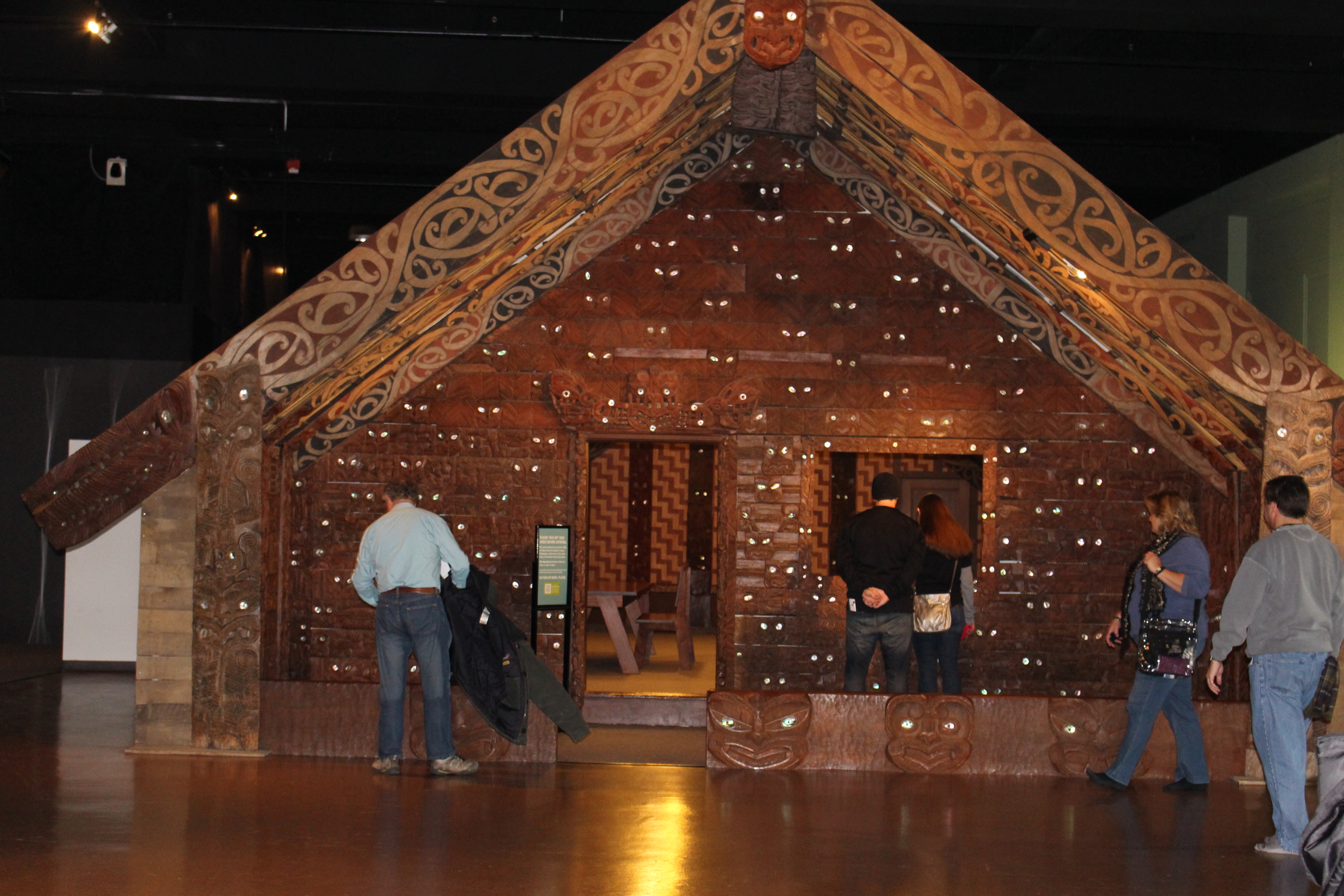
Maori meeting house at Field Museum
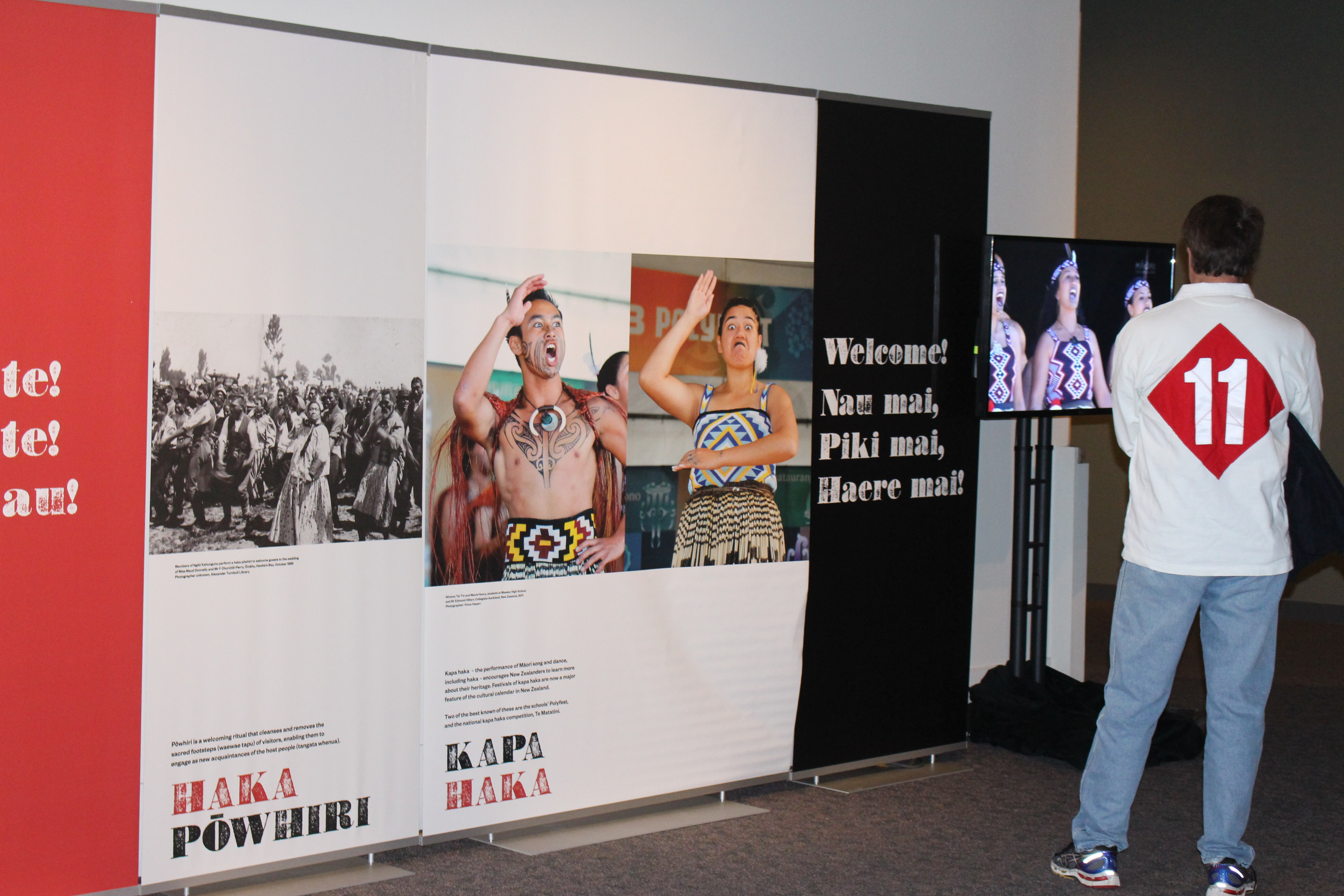
This was a historic occasion as the All Blacks had not played in the USA since 1980. It became an opportunity for All Blacks sponsor AIG to introduce Americans to some traditions in rugby and New Zealand culture. The most obvious is the haka. This is the war cry and dance that the Maori developed to intimidate their opponents. In modern New Zealand it is a living part of the culture. My favorite haka performance is the one my son and his fellow People to People travellers did for us in the Sacramento Airport upon returning from New Zealand in 2003. AIG’s #DoTheHaka video shows you how to perform Ka Mate.
The All Blacks first performed the haka as part of the pre-match rituals in 1905. While other teams do a haka before the match (youth teams, Polynesian teams) it is most strongly identified with the All Blacks. Read here for a history of Ka Mate on the All Blacks website.
Haka exhibit at Field Museum
Why does the haka strike fear into opponents? Could it be the sheer size of the All Blacks players? Other teams are also made up of big guys. More likely it is the intensity of the performance and the impact of the entire team doing it in unison. This is a group of guys who are bonded and demonstrating how they are going to play as a unit on the field. I am thinking that if you are the USA Eagles on November 1 at 2:50 p.m. you are thinking “Oh crap. I am in for it now.”
The Field Museum, Chicago’s natural history museum, put together a special exhibit to celebrate the haka and New Zealand culture. The Field Museum is right next to Soldier Field so I swung in there and used my rugby ticket for a discount. ($13 admission) The ticket sales person pointed upstairs and said it was by the Marai. I trooped off and spent a while wondering through the labyrinth of the Pacific exhibit until I found the Maori meeting house.
The first time I visited the Field Museum I found their aged exhibits charming and retro. On this visit, especially with a new exhibit done in much the same style, I found it underwhelming. Wondering why they did not reach out to Auckland Museum for assistance. In fact, in my mind I was comparing this exhibit to one the Auckland Museum might do and finding the whole presentation lacking in spirit and content.
The haka in modern culture is a fun, living thing that includes flash mob hakas, school hakas, and so much more. The best way to appreciate the haka is to see it live. I dare you not to get chills.
The next best thing is to see the All Blacks haka from the game on November 1.
One of the challenges of visiting any country where it takes 12+ hours to fly to: you want to pack in as much as humanly possible in your schedule. (My kids say not everyone approaches travel this way. Whatever.) When I was last in Dunedin I really wanted to spend a day cycling the Otago Central Rail Trail. It takes an entire day with the coach pick up from the railway station, the cycling, and the return; plus it was not offered the one day I could have made it work.
So this trip I was determined to make sure to experience the retired railway, now pedestrian and cycling path. After my experience with my Tour de France adventure, I knew I wanted a supported ride and as many days cycling as possible (in between penguin stops).
I started my research at the official website for the Otago Central Rail Trail. Interestingly, some tour operators advertise on the homepage but are not listed on the Tour Operators page. I made a complete list of possibilities. Then I went to Trip Advisor and checked the reviews under Otago Central Rail Trail. It is ranked the number #1 attraction in the Otago region. There were a few more tour operators reviewed here and so I added their names to the list.
Then I began the laborious process of visiting their websites and reading what options are offered and the possible schedules to fill in my matrix. Some options were eliminated because they only begin offering tours in January. Seasons are opposite from North America in New Zealand. (I know, duh.) Early December is not quite summer. I also have some time constraints and some companies have a minimum of 5 nights. Many of the businesses put together all of your reservations and equipment, but do not support you on the road. I believe I found my sweet spot. At a price of $1,200 a person or more, it is worth the extra time and effort to do my homework.
I also discovered that I will begin my adventure in Queenstown. This makes it easier to coordinate my car rental but adds some drive time to my overall adventure. I will take a train at the end of my four days to spend some time in Dunedin and fly to Auckland and then to the US from there.
Making these plans has definitely reenergized my bicycling workouts. I am using the training plan from Bike Your Butt Off! by Selena Yeager with Leslie Bonci.
Have any of you done this trip? What do you think, does it deserve its #5 ranking in AA’s 101 Must-Dos for Kiwis 2012? Any tips to better enjoy the adventure?
My adult kids and I will be celebrating my birthday and Thanksgiving in St Heliers, Auckland, New Zealand. I am so excited to share my favorite places in Auckland with them and tackling some adventures such as climbing Rangitoto. We will make a traditional American groaning feast for my Kiwi friends and then we will pursue our own adventures.
Every trip begins with booking tickets on Air New Zealand. For $50 one of their helpful advisors will help make more complicated reservations over the phone. Sometimes there is a savings if you are traveling to several places within New Zealand during your stay. This trip I made all of my reservations on line. Their easy to use site allows me to book my flight, pick my seat and let them know if I have special dietary requirements or need to bring an extra bag.
With my bookends of arrivals and departures (and notice that you lose a day on the way over from USA and live your last day twice on the way back), I begin to fill in the middle points. If I have confirmed dates in certain places I typically log on to Booking.com and make my hotel reservations, Kayak.com for auto reservations and then Trip Advisor for ideas for things to do and for reviews of hotels if I am undecided on Booking.com.
I am going to South Island for a combination of penguin viewing and cycling. Penguin viewing was my highest priority: I want to see both Fiordland penguins and yellow eyed penguins. And I want to visit Stewart Island (mainly for kiwi birds). My challenge was figuring out the best places to see these and then create an itinerary that is reasonable and fulfilling.
New Zealand Penguins website is a life saver. It lists several options for each type of penguin that I want to view. I decided to visit Lake Moeraki in South Westland, Stewart Island in Southland, and Dunedin in Otago for my three penguin stops. I created a matrix for Dunedin since there are so many options. I have begun searching the various penguin guide websites and emailing for more details. I will soon have my tickets or reservations.
The complicating factor is the cycling. I really would like to cycle the Otago Central Rail Trail from Queenstown to Dunedin (the last bit by train). I had to establish the timeframe for that before I could solidify my penguin plans. And I had to make some adjustments to my plans. Originally I thought I’d drive from Queenstown to Lake Moeraki to Invercargill to Dunedin, but the cycling trips begin in Queenstown. Some quick changes to my itinerary and voila! I am able to do everything I want to do.
It is a very full schedule, and not everyone would find four days of cycling the “relaxing” bit. I am super charged about it.
We did not go looking for a glowworm adventure. We were just looking for a place to stay near Tauranga on the North Island of New Zealand. The Mount Tutu Ecosanctuary popped up on Trip Advisor and my friend UK Sarah agreed that it sounded like a fun base camp for our girls road trip. Upon arrival our hosts Tim and Debbie Short explained that tours of the native bush and a night time glowworm adventure were part of our package. We said yes to both.
Tim Short guiding us on bush walk at Mount Tutu Ecosanctuary
Tim led the bush walk in the morning after breakfast. I am glad that we did this first so we could see the kind of woods that we would be walking in at night. Our host’s enthusiasm was infectious and we found ourselves asking lots of questions about the trees, flora and birds that we discovered once we softened our eyes. When I am in New Zealand I am usually looking out to sea for penguins, seals, and albatross. Tim’s guidance really helped me appreciate the beauty of interior New Zealand.
After dark we returned to the dining area where Tim outfitted us for our glowworm adventure. We put on our headlamps and spent a little time getting accustomed to walking in the dark with and without our headlamps. UK Sarah and I both got a little giggly as it was a little bit scary and a little bit exciting.
Tim led us to the woods and down into a small ravine where the creek has carved steep banks about as high as my 5’3″ head. On this dry evening the creek was gently burbling. It did not seem long before Tim asked us to stop and turn off our headlamps.
The utter darkness revealed the magical beauty of the glowworm. The trees blocked our view of the starry heavens, but this was like another constellation on the creek bank. I was filled with awe. And delight.
The little girl who delighted in lightning bugs on an evening in Iowa long ago reawakened. After a time of appreciation I began to get curious about how glowworms “work”. In the Te Ara encyclopedia it explains: “In New Zealand and Australia, glow-worms are the larvae (maggots) of a special kind of fly known as a fungus gnat. Fungus gnats look rather like mosquitoes, and most feed on mushrooms and other fungi. However, a small group of fungus gnats are carnivores, and the worm-like larvae of these species use their glowing lights to attract small flying insects into a snare of sticky threads. One species, Arachnocampa luminosa, is found throughout New Zealand, and others occur in Australia.”
What other kinds of species attract prey using sticky threads? Spiders! Not long after our eyes grew accustomed to the dark and the glowworms, we began to see darker shadows on the creek banks. Really big spiders! The scare factor went up a few notches and it made the experience that much more thrilling.
Eventually we were ready to head back to the lodge. We were not able to capture the glowworms with our cameras and so we began to savor the experience to make lasting memories. Experts say that heightened emotions make memories stick. We will not forget this adventure.
A lot of visitors go to the Waitomo Glowworm Caves to see the glowworms. But I do not do caves and so my cursor never lingered over this option. I am so thankful Tim and Debbie are willing to share their glowworms with us, and to lovingly preserve the ecosystem around them so the glowworms might continue to thrive.
Tim and Debbie Short with their three daughters have been managing these 16 acres of preserve for 25 years. We stayed in a separate guest house where the philosophy behind the decor seems to be “more is more”. Debbie and Tim have given over a part of their home for the guest dining area and have a library of books to help identify the abundant bird life all around. They are generous souls and we felt the tranquility of the Ecosanctuary permeated our stay.
Our road trip began in Auckland, New Zealand. We drove to Tauranga, stopping at Hobbiton in Matamata (fun to say) for a pint of ale at the Green Dragon. We spent a full day in Tauranga, with a morning bush walk, a bit of shopping in town and a hike around the Mound, and some sightseeing, then back to the EcoSanctuary for our glowworm adventure. The next day we drove to Rotorua and checked out the hot springs and the museum before heading back to Auckland. It was just the right balance of driving and varied activity. It almost goes without saying that everything was beautiful–it is New Zealand.
Blog post inspired by Where’s my Backpack? http://wheresmybackpack.com/2014/04/25/glow/
There are certain trips you embark on that leave you dumbfounded. You are never the same again. When you get home you’re not quite sure how to go on with life; how you understand your routine, your friends, your habits, and choices are viewed through the new lens you’ve picked up.
Two of my best friends and I zipped off to New Zealand’s North Island for two weeks (if you’re wondering, we’re saving South Island for the next trip). We didn’t pick New Zealand just because we’d already seen Europe, or Southeast Asia, Africa, the U.S., or South America (between the three of us, we’ve covered much of the world though). Needless to say, having been around the world a bit, I am really impressed by “Australia’s little brother” (words from a local, not me!). We bought our tickets to kiwi-land because we heard about and saw photos of the land’s unparalleled beauty. We’re also huge Lord of the Rings nerds. Huge. And we were hankering for a trip where we could traverse the outdoors.
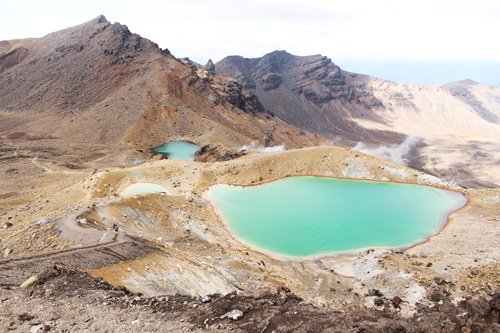
Ngauruhoe summit with the tip of Ruapehu, in the distance! At a 30º grade, the slope of Ngauruhoe is covered in loose volcanic rock, which will scuttle down at a brush from a gust of wind. The summit sits 2200km above sea level and one should allow at least 3 hours for this hike.
New Zealand is called home by one of the best hikes in the world: the Tongariro Alpine Crossing. It’s so jam-packed with wonder that I could devote a handful of blogposts to the Crossing alone. It’s best to be well-equipped with the right gear and under the right conditions. Locals warned us that unprepared people have expired on this hike so we made sure to bring twice as much water as the recommended amount per person. Good thing too! We used it all by spontaneously adding Mt. Ngauruhoe to our hike. Famously, Ngauruhoe, the most active of the many resident volcanos, is known for being Mount Doom in Peter Jackson’s Lord of the Rings trilogy.
A third of my hike up Mt. Ngauruhoe was glamorously done on all fours, just like the plight of Frodo and Sam in Return of the King–unlike them we had plenty of water and snacks on the way up and down and 0 orcs to fight. Needless to say, going “up the hill” was a challenging trek, and for me, one of the most difficult physical feats I may have accomplished in my entire life. (If you’re a mountain climber though, I’m sure this is a walk in the park for you.) “I’m going to go home and eat those hikes in Malibu for breakfast!” I thought after huffing and puffing to the summit. I’m pretty sure someone was playing “Eye of the Tiger” in my last 20 meters up too.
So why do I see my life differently after returning to the States? What has kept me up at night or silent in thought in my reunion with friends? I’m not 100% sure, but I think this volcano may have something to do with it. I didn’t expect myself to be capable of hiking Mt. Ngauruhoe. We all surprise ourselves here and there when our cooking comes out fairly edible or when we get hired for a job we didn’t think we deserved. Grace is sometimes the only explanation you have for these types of situations!
When you outdo yourself in hindsight like I did, your mind keeps wandering back to that sobbing young woman you passed on the ridge, her on her way down, and you less than half way up, not-quite-sobbing but questioning the potentially-bad life choice you may be making with every step up. Maybe you think about the very second you sat down at the crater’s edge, very much alive, dumbstruck & breathless, both from being in awe of the magnificent view and from being pathetically out of shape compared to all the Shawn-T’s chest-bumping all around you. Or the moments you were sliding down the loose scree turning back every minute or so to check for small bumbling boulders aiming to bop you on the melon!
Traveling has the purpose of never leaving you the same, and I think we sometimes forget and get more than we bargained for. Traveling leaves you vulnerable and unsure of how to proceed with your “normal” life, because you can’t! After pushing your limits, you simply can’t go back to the way you were before. The return is emotionally terrifying and exhilarating, which is why many of us sink back into our routines, forgetting why we came home so shaken up, instead of letting our experiences change us from the inside out. Besides those flashbacks, the things I think to myself now ask me how I can create more stories like this one. What am I actually capable of? How can I challenge myself to push my limits and what could I achieve if I tried passing my comfort zone? A whole new world of possibilities opens up when you’re reminded that you don’t know everything about yourself. The mountains you once thought were insurmountable seem smaller. Certainties don’t seem so certain.
To me, this is about getting closer to learning what sorts of things make me come alive. My challenge to you for your next adventure is to open yourself up to the inner processing that goes on during and after the trip. Take note of the scenery and people around you, but also take note of every emotion you have and every mental box that gets broken along the way and do the daring thing: take what you learned about yourself and the new experiences you’ve gleaned and figure out how to weave it all back into the beautifully messy tapestry that is your life!
Want to hike Ngaurahoe/Tongariro?
Get yourself on the North Island of New Zealand and you can stay in Turangi (we stayed at Extreme Backpackers–say hello to John for us!), Taupo, or Tongariro to be near the national park for an early start. Check the weather regularly (a week before, a few days in advance, the night before, and the morning of). The Tongariro Alpine Crossing is a one-day 19.4km adventure; it’s not a round trip walk, so park your car and hire a shuttle in advance to truck you to the other end of the trail (I recommend starting from the Mangatepopo trail head). Pack food and 2L of water minimum and be prepared to take your trash with you. There are no rubbish bins along the way and only 2 restroom areas. Hiking shoes are recommended, but you can get along with good cross-trainers (you want hiking boots and gloves for Ngauruhoe however). Dress in layers. Visit the government site for more info. Cheers for reading and enjoy!
Raechel Wong is an artist and blogger from Los Angeles, CA, who loves moving in whatever art she can get her hands on, whether it be drawing, writing, dancing, or performing. Read more about her global adventures at http://raechel2leeds.blogspot.com
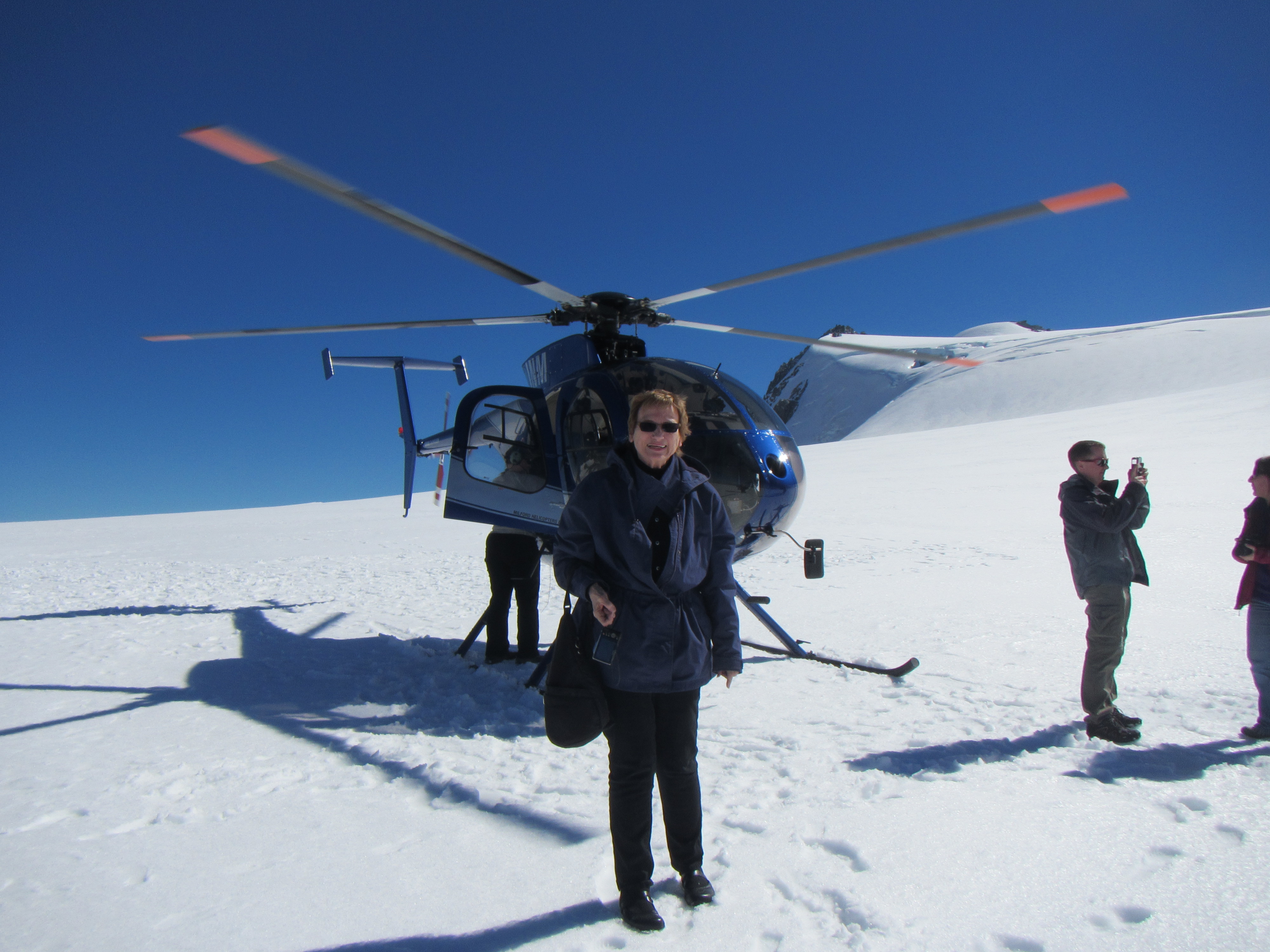
The most thrilling experience Mom and I have shared is flying in a helicopter and landing on a glacier above Milford Sound. She might argue that it was my birth, but I need only remind her that I was not a very cooperative newborn. I also present as evidence that on this day in February were both smiling.
Karen (Mom) and American Julie on board helicopter
Pilot Sarah of Milford Helicopters lifted off the ground with us carefully belted in the back and another couple alongside her. We all had our earphones on and so she might have heard me exclaim, “Oh, this is awesome.”
Neither of us had flown in a helicopter or landed on a glacier until now. We flew into Milford Sound, climbed up the face of a cliff and tipped over the edge (keep breathing!). Then we flew over mountain peaks to Mount Tutoko and lowered onto the glacier.
Pilot Sarah instructed us to get out carefully and only walk to the front of the helicopter. We gingerly dropped onto the glacier and then enthusiastically snapped photos. I even took a picture of the so blue sky.
So blue sky
We climbed back in the helicopter and this time we rode in the front. My mom was still wearing her grin. (She did not stop smiling the entire trip.) We lifted off from the glacier and flew over more mountain peaks to a landing pad just on the other side of the one-way tunnel and met up with our terrific bus driver and continued with our group back to Queenstown. The entire trip was the most thrilling and memorable 30 minutes Mom and I have enjoyed together.

 Well, obviously no. Stewart Island is visible and the South Pole is 4,810 kilometers away. Once upon a time, if you were traveling on a ship from Scotland, Ireland or England, it felt like the end of the world.









 americanjulie.com