You can order yarn and penguins in sweaters on-line.
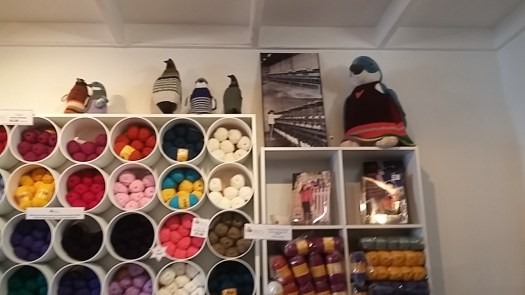
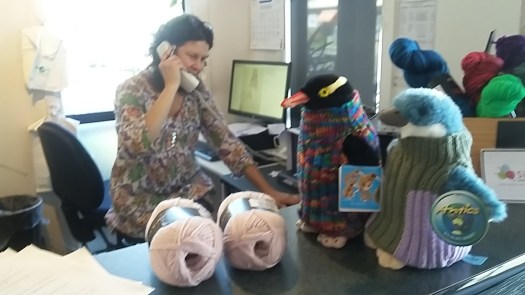
I have been intrigued with the wool shop Skeinz in Napier since 2011. When I was living in St Heliers and the Rena shipwreck happened the shop put a call out for penguin sweaters to help with the recovery. They were completely swamped by the response and the veterinarians only needed a few (their use is actually no longer in vogue). So Skeinz was clever and bought some stuffed little blue penguins and yellow-eyed penguins and sold the sweaters to raise money for penguin recovery and conservation.
The shop is in an industrial part of town because it is co-located with their wool mill and is essentially a factory outlet. Too far to walk and impractical to take a taxi so I rented a 3 speed cruiser and headed to the beach bike path. It was counter-intuitive to go via the Port, but the bike rental guy suggested that there would be less traffic and more scenic.
All good until I got to the transition from the Quays to the light industrial part of Napier called Onekawa. Suddenly I was navigating through roundabouts with logging trucks! I found a new gear fueled by terror! I got lost a couple of times and finally put away my paper map for Ms. Google. My 20 minute bike ride took twice as long, but it was worth it.
I had packed 2 patterns for a sweater and blanket for a friend’s baby due in December. (I learned the hard way to not depend on being able to find a pattern in a knitting language you can read. And then how much yarn to buy?) Karen helped me find the NZ equivalents of the right weight yarn. I really enjoyed looking at and feeling all the beautiful different wool yarns. Karen figured out how to ring it up so I didn’t have to pay GST and Skeinz ships overseas for free for orders over $100 NZ. I appreciated her assistance especially as there was a steady stream of customers.
Karen asking the office how she can save me the GST: the key is she has to ship it directly to my home in Sacramento.
I decided to cycle back to the City Centre in the most direct route. It was another blood pumping pedaling experience. When I stepped off my bike I felt very satisfied with my yarn haul and as if I’d wrestled ewe to ground, sheared and spun wool all while being chased by wolf! I went back to my hotel, showered and treated myself to a delicious dinner at Bistronomy.
$20 NZ for 2 hours with a grace period. Includes helmet and lock.
The National Aquarium of New Zealand is not very large and only takes about an hour to see the displays, yet it includes a charming Penguin Cove where over a dozen injured little blue penguins live out their days in ease and repose. I watched Dora, the hand-raised penguin who really likes people and swims and chatters at the front of the pool, while another penguin sunned herself on the deck, and a third penguin swam for the joy of swimming. You can view through a window underwater and from above.
When the keepers came out at 1:30 to feed the penguins, almost all of the penguins came out to grab a fish or two. The penguins feed three times a day in view of the public (9:30 a.m., 1:30 p.m. and 3:30 p.m. daily). One keeper shares information about the penguins while the other feeds them by hand. They warn about the threats to penguins like the pollution and fishing line that caught Gonzo and removed his fin and lower beak. The rescued penguins live longer at the aquarium than they would in the wild; one elderly penguin is 21 years compared to 12 years average in the wild. The keeper said she’ll be served her lunch “at home” likes Meals on Wheels.
The towns of Napier and Hastings were almost completely destroyed by an earthquake in 1931. Napier was rebuilt in the Art Deco style and continues to celebrate this architectural heritage in festivals and tours. Many cruise ships stop here for a day and one convenient penguin outing is to the Marine Parade and National Aquarium of New Zealand. For over a kilometer along the shoreline there are gardens and walkways that lead from the Hawkes Bay Museum to the Aquarium.
Entry to the National Aquarium is $20NZ for one adult. A family of four can visit for $54NZ. There is special pricing for students and seniors. The aquarium is open from 9 a.m. to 5:00 p.m. The café and gift shop are currently closed for remodeling.
It is a 20-minute walk from the tourist information centre to the aquarium. The paths are flat and easy to navigate if you are in a wheelchair or pushing a stroller. Just across the street from the I-Centre is a bike rental place. For $20NZ you can rent a cruiser with a helmet and lock for 2 hours. Most of Napier is completely flat so you can pedal to the aquarium, see the penguins and continue exploring.
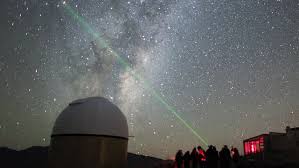
On the shores of Lake Tekapo about 8 km from the village is the Mount John Observatory, New Zealand’s premier observatory run by the University of Canterbury. To visit this observatory and to see stars through one of their telescopes, you only need make a reservation with Earth and Sky tours and keep your fingers crossed for clear skies.
There are nine tours to choose from depending on the time of year and time of day. Some are designed especially for families. We made reservations for 2 adults ($148 NZ per person) for the 9:30 p.m. tour. When we arrived at the Earth and Sky office and shop in the village we were informed that there was 100% cloud cover. We had the offer to go on the tour with just the behind the scenes observatory and the slide presentation, or to reschedule, or to get a full refund. Since I had just been to the California Science Museum planetarium and we were very tired and the forecast was rubbish, we opted for the refund.
Late the next night the clouds broke up and Sarah set the alarm to check the stars at midnight (very good) and at 4:00 a.m. (very, very good–full on Milky Way). I had not seen the stars so glorious in such a long time. I only wish it had not been so cold and damp or I would have spread a blanket and stared longer. It is a healthy reminder that these stars are there all the time, we just can’t see them because of light and air pollution.
The Mackenzie Basin, where the Mt John Observatory is located, is especially good for stargazing. On the Bortle Dark-Sky Scale—which measures how dark the night sky is—the Mackenzie Basin scores number 1, the highest (best) darkness rating. Astronomers disagree about how many stars it is possible to see with the naked eye (a lot), although Professor Brian Cox calculated the number as anywhere between 6,000 and 10,000. Compared to 200 in most parts of Europe. And the center of the Milky Way is in the Southern Hemisphere in the constellation Sagittarius.(Gerard Hutching, Why Can’t Kiwis Fly?)
When we caught up with my friend Ole in Christchurch he told us he was taking a group of photographers to Lake Elsinore to learn to photograph the southern lights also known as the Aurora australis. He works for the Canon company and gets to do lots of fun stuff like this.
So whether you set your clock to go out on the lawn by your hotel room, or you book a tour with Earth and Sky, don’t sleep through the most awesome natural show in New Zealand.
All photos for this blog post are from Google Images search. My photography skills do not extend this far–no fault of my trusty Canon camera.
One of my earliest penguin experiences was with the Pohatu Penguin Plunge in Akaroa. Several years ago I got up at the crack of dawn in Christchurch and drove out to Akaroa to go seakayaking and observe the penguins in Flea Bay on the Banks Peninsula. It was a wonderful experience, except for getting very, very seasick (but I’m easily prone).
I recently returned to the Banks Peninsula and was able to convince UK Sarah to go with me on the evening penguin safari at the Pohatu Marine Reserve. We reported to the Pohatu Penguin Plunge office in Akaroa and met the 3 other participants and our guide Ben. We climbed aboard the van and began the drive up the side of the old volcanic crater and down the other side to Flea Bay. We stopped along the way for some great views. Ben explained with his French accent the history of Akaroa from volcanic formation, to French settlers landing 4 days after Waitangi Treaty was signed, to the current efforts to conserve the penguin habitat at Flea Bay.
We stopped at the farmhouse to collect binoculars and to put on some camouflage raingear. We also fed bummer lambs a bottle and gave some pellets to the ewes. There is a bathroom here (and the last stop for the next several hours).
We headed the short distance toward Flea Bay—so named because early explorers noted that the penguins here were covered in fleas. Ben took his notebook along to make observations along the way. He reminded us the importance of watching the penguins from hides and not touching them or using flash photography.
It is tricky to time the penguin viewing—the start and finish of tours changes as spring turns to summer—because the penguins have adapted to the introduction of mammal predators by postponing their return to land until nightfall. When we began our walk only a few little blue penguins had returned, and as it got darker, we could see more and more penguins but less and less of them. And the ground is rough (you are walking along a hillside on a sheep and penguin trek not a proper path).
Almost right away we came to an artificial penguin nest provided by the Pohatu Penguin Plunge. If left to their own devices, the penguins would dig out nest in the dirt, but this requires a lot of energy and the colony is struggling to maintain its numbers. Providing the artificial boxes is a common practice approved by the Department of Conservation.
It is easy to tell the occupied boxes by the tell-tale poop outside the door. Each nest is numbered and the lids on these boxes are removable so Ben and others can check on them and track the number of chicks and help to educate us, the interested public. Ben showed us two different nests—one with a male and some chicks and one with a female and some chicks. The chicks were still small and difficult to see. Ben cannot touch the penguins so unless they shift it is difficult to know for certain. He replaced the lids and then added a rock to keep curious sheep out of the nests.
The little blue penguins in this colony are growing in numbers but only gradually. They experienced a 5% dip after the biggest Christchurch earthquake due probably due to stress. Their survival is threatened mainly by overfishing of their food supply and by stoats and other alien mammals harassing chicks and eggs. In the van, Ben explained the Department of Conservation approved poison program and then on our walk showed us a stoat trap. He recently started baiting the trap with mouse juice (pee from pet mice) and is finding more stoats than before. The most vulnerable period for the penguins is during the month or so when they molt and gain a new coat of feathers.
We walked to a set of hides where we could see the little blue penguins without disturbing them. I asked Ben how the chicks finally move out after weeks of being fed by their parents. He explained that the parents finally just stop going back to the nest and the young adults spend several days getting hungrier and hungrier until finally they clamber to the sea and begin fishing for themselves.
The Yellow-eyed penguin appeared much bigger to my naked eye than this photo suggests.
We walked to the furthest hide and received our reward: a lone yellow-eyed penguin. He was very handsome preening himself before going home. We watched him for some time. And while we watched we also saw a New Zealand fur seal go into the water from the nearby rocks. The seal swam just off shore and the returning little blue penguins avoided him as they returned from feeding all day.
In this area the white flippered penguins and the little blue penguins coexist and breed with one another. They are not considered separate subspecies. Only along these shores on the Banks Peninsula and Motunau Island will you find the white flippered penguin. I was pleased that with the help of binoculars I could soon tell the difference with the penguins we watched come ashore.
We returned slowly to the farmhouse and returned our gear. It was a lovely experience and the five of us from Scotland, Malaysia, England, USA and France were united in our admiration for the penguins.
The evening penguin safari costs $75NZ per adult and lasts 3 hours. Transportation is provided from Akaroa. No food or drink is provided by the tour company. Reservations are recommended. Uneven terrain may be a challenge for some, ask about accommodation if this is a concern. The Department of Conservation provides guidance for conserving the marine reserve but no funding. The Pohatu Penguin Plunge activities help to pay for the conservation of the habitat in Flea Bay. Best time for viewing is September through February.
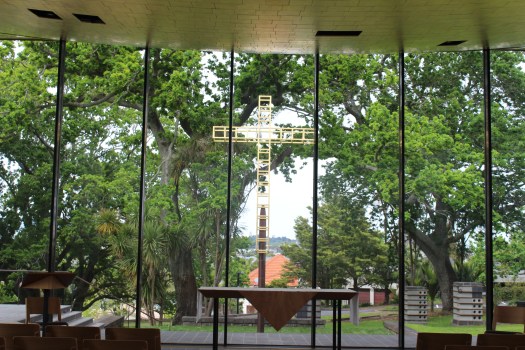
Largest expanse of stain glass in Southern Hemisphere is in Auckland’s cathedral; designed by Nigel Brown
No one associates cathedrals with the new world. If you go to Europe you reserve time to see Notre Dame in Paris or St Paul’s in London. I am one of those odd people who checks out a cathedral while in New Zealand.
New Zealand has been inhabited by people for the shortest time of anywhere in the world. And for much of that time the Maori built fort like structures, but no cathedrals. Not until Europeans arrived with their ideas of suitable places to worship, and then every New Zealand city worth its salt needed a cathedral (or two as often the Roman Catholics followed suit).
Holy Trinity’s newest chapel
On this trip I have seen three Anglican cathedrals so far: Holy Trinity in Auckland, the temporary cathedral in Christchurch, and St John’s Cathedral in Napier. The history of New Zealand and the Anglican church are intertwined in the life of Bishop Selwyn. His portrait is generally found in each cathedral–unless they’ve been destroyed by earthquake.
The cathedral in Christchurch was recently felled by the February 2011 earthquake, but the Napier cathedral was also destroyed by an earthquake and fire in 1931. Unfortunately the quake struck while holy communion was in progress. As it states in the display at the back of the cathedral, “One parishioner, Edith Barry, (Mrs. T. Barry) was pinned beneath the falling beams and when she could not be extricated and fire began to rage through the stricken city she had to be given a merciful injection of morphine by Dr. G.E. Waterworth.” (Who said visiting churches is dull?)
St John’s Cathedral in Napier was rebuilt in the 1970s. It is very conducive to worship and has some lovely stain glass. It is not as grand as the cathedral in Christchurch was before it was damaged in 2010 and destroyed in 2011. Sunday services are held at 8:00 and 10:00 a.m. I attended the later service and can vouch for the very talented choir.
We arrived in Christchurch just in time to attend the evensong service at the transitional cathedral, or Cardboard Cathedral at 4:30 p.m. The boys’ choir sang beautifully and the service was a blessed reminder that while the earth may heave, there is still some continuity and community that remains. The cathedral is constructed out of specially treated cardboard–hence the nickname “cardboard cathedral”. It was only meant to last five years and it has already been four. It will need to last much longer it seems as no one can resolve a way forward with some wanting to rebuild the former cathedral and others wanting to start afresh. Might I suggest a compromise? Consider the Coventry Cathedral where they incorporated some of the old cathedral that remained after the Blitz into the new modern design to beautiful effect.
A funny thing happened on my way to New Zealand, my colleagues told me about the Pacific Chinook Salmon living in New Zealand. Whaaaat??
It seems that once upon a time when a young United States was expanding in the west, an energetic Livingston Stone was US Deputy Fish Commissioner, America’s Senior Fish Culturist, and ultimately the “father of fish culture on the Pacific Coast”. He zealously went about the western U.S. introducing non-native fish like striped bass into streams and the California delta where they harass dwindling salmon populations. (Thanks Stone.) He also shipped Chinook Salmon eggs around the world in the late 1800s.
Some of those eggs found their way to New Zealand and were planted on rivers in South Island including the Rangitata, Opihi, Ashburton, Rakaia, Waimakiri, Hurunu, and Waiau Rivers. Alas, the Kiwis also built hydro-electric facilities and irrigation canals that blocked the salmon’s access to the high mountain streams and the spawning grounds they love. Some remain.
Today you can fish for Chinook salmon whose ancestors swam in the Russian River on the two wild and scenic Rangitata and Waimakiri Rivers. I spoke with Barry Clark by phone, a fishing and hunting guide based in Lake Tekapo, and he explained that the salmon adapted well. They come back after 2-3 years at sea so they are smaller than California’s salmon. The wild stock are also fewer in number due to harsher conditions at sea–what with warmer sea temperatures and increased commercial fishing. Otherwise the life cycle is the same: spawning on gravel beds, and rearing on floodplain from fry to smolt, before going out to sea.
The story comes full circle as the Winnemem Wintu tribe in Northern California believes that the surviving salmon in New Zealand are genetically closer to their historic salmon that spawned on the upper McCloud River but were all but destroyed when Shasta Dam was built. They are lobbying for these fish to be reintroduced and NOAA is studying the genetics of the fish and considering the possibility. The tribe’s quest is detailed in an award-winning documentary. This is part of an ongoing debate over fish hatcheries–including the one named after Livingston Stone.
If you do find yourself in the Canterbury region of South Island in New Zealand, then give Barry Clark a call (6806-513) and he can show you the best places to fish for trout in canals and lakes year round or to fly fish from the first Saturday in November.
Postscript: Not every introduced species is problematic. Another case in point is the bumblebee. Four species of bumblebee was introduced from Britain at the turn of the 20th century to pollinate red clover. None of the native bees had long enough tongue to reach inside red clover flowers, but the imported bumblebees could do the job. Red clover is essential to sheep and dairy pastures. Over time, England’s bumblebee, Bombus subterraneus went extinct. Now beekeepers in England are working to reintroduce New Zealand bumblebees. The bumblebee also inspired a classic Kiwi toy.
When you visit the South Island of New Zealand you find yourself saying “wow” a lot. It is hard after a while to be impressed. Places that would win most beautiful or special contests in other countries become average in New Zealand. So believe me when I tell you that you will find Lake Tekapo stunning.
As it says in the coffee table book in our hotel room: “From the moment you cross Burkes Pass and first see the enormous, tussock-covered plain of the Mackenzie basin and encircling Southern Alps, you know you have arrived in a another world—a largely untouched world filled with wide open spaces, breathtaking scenery, and are so clear it feels, as Dame Ngaio Marsh once wrote, ‘unbreathed, newly poured out from the blue chalice of the sky.”
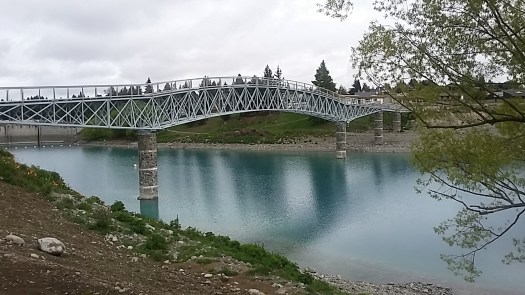
Pedestrian bridge links lake trail from village to Church of Good Shepherd; glacial “rock flour” turn the water vivid blue turquoise.
We landed in Christchurch around 8 a.m. and picked up our rental car. We drove south on Highway 1 then east on 79 for about 3 hours. Steadily the farmland and small towns grew in beauty and charm. Finally we pulled around a corner to be gobsmacked by Lake Tekapo and the snowy mountains that frame it.
We are still an hour from the tallest mountain in New Zealand–Mt Cook or Aoraki (the cloud piercer). We discussed driving to see it, but the weather has been rainy with low clouds and the odds are that it won’t be visible. Similarly we booked the 9:45 p.m. tour of Mount John Observatory but received a full refund from Earth and Sky tours when the cloud cover was 100%.
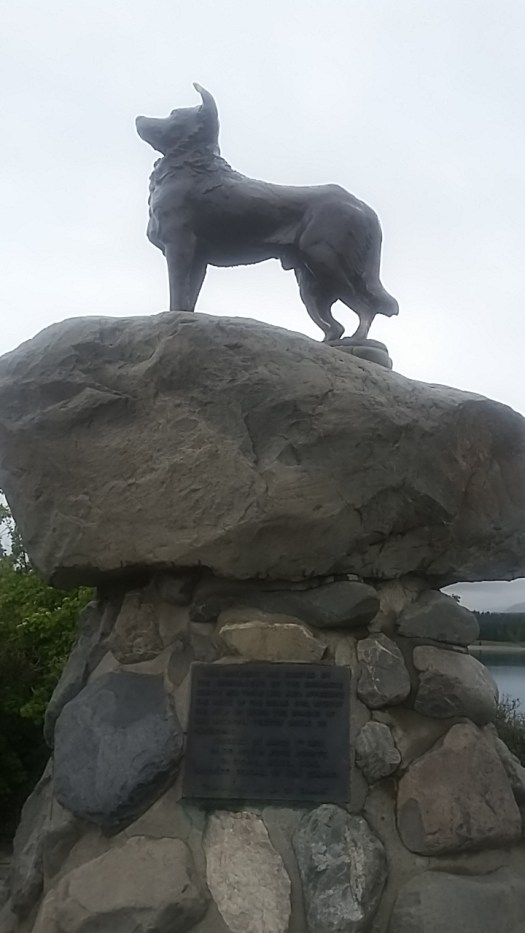
This statue by Innes Elliott honors all of the collies that assist shepherds–not just to James Mackenzie’s partner in sheep stealing crime: his dog Friday.
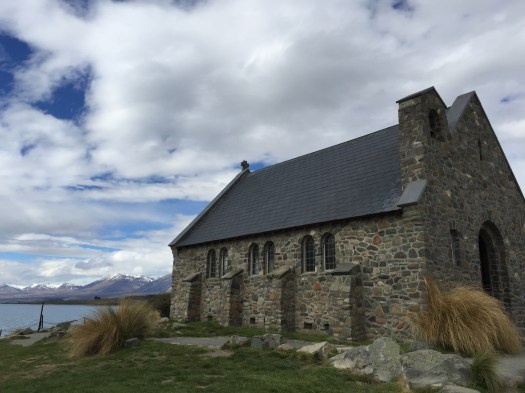
There is still so much beauty and interest.We walked to the Church of the Good Shepherd and the dog statue. This Mackenzie Country area is named for James Mackenzie, a sheep rustler with a strong constitution who also happens to be the first European to find his way to this special place. More sheep farmers flooded in from all over Scotland and England and carved out a life in this remote place. The population didn’t really reach any significance until the hydro-electric dams and facilities were constructed in the middle of last century. Now tourism rivals farming for economic eminence.
Church of Good Shepherd built by Presbyterians and Anglicans in mid 1930s. (photo: Rev. Sarah Clare)
We’ve enjoyed great coffee and toasted cheese sandwiches at Mackenzies, and a great lunch at the Tin Plate. Our hotel room at Lakeview Tekapo is super comfy with elegant and modern furnishings that all focus on the view of the lake and mountains. We are hoping for a clear night tonight because the area is protected from light pollution and the stars are rumored to be amazing. So glad this is where UK Sarah and I are spending the most time on our road trip.
Long time readers of this blog may remember that I absolutely love St Heliers in the East Bays of Auckland. In my book any day in this village is a good day.
When I arrived on Sunday morning at 6:30 a.m. I picked up my luggage, my first flat white and caught a cab to a friend B’s house. I showered and dressed for church. We went to the 9:30 service at St Phillips. I finally learned that All Black’s had won the rugby match against Australia the day before.
B’s friend Joan joined us and we went to the boardwalk to enjoy a drop-dead gorgeous day in St Heliers. The pohutukawa trees were just starting to bloom. The sun shone brightly. It was Labour Day weekend and the beach was full of families enjoying the ocean and one another.
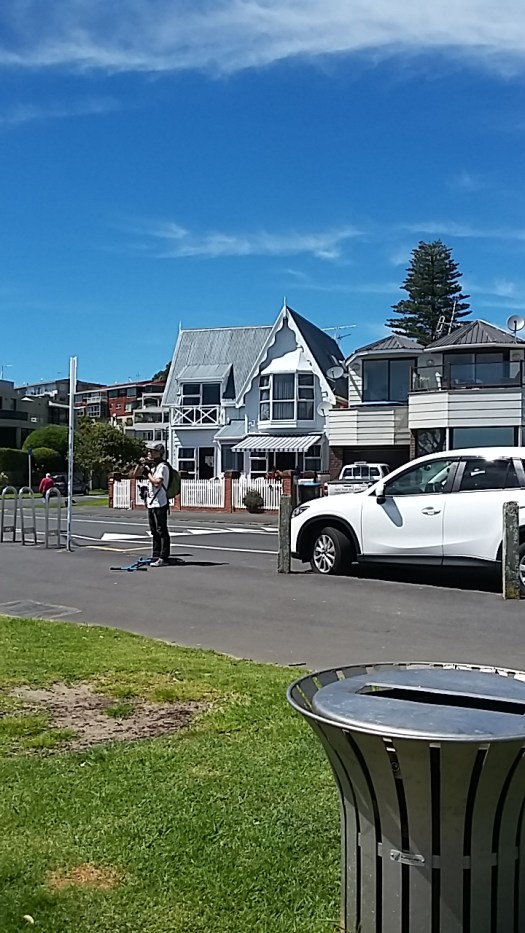
This gingerbready house sold for $3 million recently… guess I will have to win the lottery to own a home in St Heliers.
We walked to the large Morton Bay fig trees on the green and then turned back toward Annabelle’s for lunch. We were able to get a table outside and continue to enjoy the day. It was perfect.
It’s that time of year. Tomorrow the ISO will announce the official 2017 Tour de France route. Rumors are flying on Twitter and Facebook about some of the stages being more than 400 kilometers. Ugh. When will they learn from the Vuelta and the Giro that shorter stages are more competitive? The race is already an endurance test. As a fan, the main reason you should tune in to the route announcement is to begin planning your own adventure–especially booking your hotel.
You can cycle or spectate with an official tour, such as Trek Travel or Thomson Bike Tours. Or you can plan your own adventure. I recommend looking for places where there are starts and finishes close together. The Pyrenees are also terrific: beautiful, many viewing spots within reach, lots of hotels to accommodate teams and fans.
The catalogs for bicycle trips are also arriving. Trek Travel’s beautiful brochure arrived and I spent several happy hours looking at the possibilities. With Trek you know your hotel will be fabulous, the food fantastic and the guides/support reliable, and you pay dearly for this top of the line experience. The Adventure Cycling Association tour catalog also landed in my mailbox this month. These trips are less expensive, generally a bigger time commitment and a bigger physical challenge than your typical bike tour. Two people in my RAGBRAI 2015 group met while riding across the USA with Adventure Cycling Association and they had all positive things to say. You can select from fully supported, Inn to Inn, self contained or van supported rides (and more).
I’ve been dealing with some health issues so my goal is to work my back to the place where I can consider one of these adventures. My ideal trip in 2017 would include the start of the Tour de France in Dusseldorf, Germany in July. What destination is in your future?
I was looking for something to watch other than sport or politics and I found A Few Good Pie Places on PBS.org. Most of the places they featured were east of the Mississippi. One of the exceptions was Ikeda’s in Auburn. How had I not heard of their pie before? Afterall, they sell 80-100,000 pies a year!
Meanwhile, my friend Dan Macon was also celebrating a milestone–24 of his photographs from his 365 Days of Sheep are featured in art show in the Auburn City Hall. I called my Mom and invited her to join me to taste the pie and see the photos. She added Machado’s to our list of places to go.
We went straight to Ikeda’s to enjoy pie. Surprise, they serve breakfast and lunch too. I had a delicious western chicken sandwich combo and my mom a burger. Then we shared a piece of wild blackberry pie (yum) and tasted the french apple (too sweet). There is also a complete store of fruit, vegetables and other delicious foodstuffs.
We then proceeded a short distance to Machado Orchard. I bought a bag of Empire apples and a slice of classic apple pie. The filling was delicious but Mom and I agreed that the crust was doughy.
We were feeling ready for a nap! We pressed on to find the Auburn City Hall. Google seemed a bit confused. We parked at the beautiful courthouse in Old Town and walked the block to the City Hall. Alas, it is not open on weekends. We could see some of the photos through the doorway and we definitely will return.
Most people in the greater Sacramento area think of Apple Hill at this time of year for pie and fruit (east on Interstate 50). Auburn is about equidistant from downtown but east on Interstate 80. It has a growing number of small farms. October 9 is Placer Grown Farm & Barn self guided tour from 10-4.

 All good until I got to the transition from the Quays to the light industrial part of Napier called Onekawa. Suddenly I was navigating through roundabouts with logging trucks! I found a new gear fueled by terror! I got lost a couple of times and finally put away my paper map for Ms. Google. My 20 minute bike ride took twice as long, but it was worth it.



 On the shores of Lake Tekapo about 8 km from the village is the Mount John Observatory, New Zealand’s premier observatory run by the University of Canterbury. To visit this observatory and to see stars through one of their telescopes, you only need make a reservation with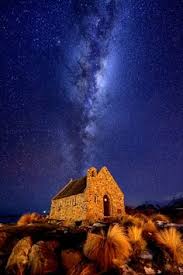
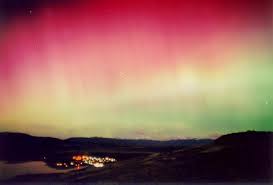 When we caught up with my friend Ole in Christchurch he told us he was taking a group of photographers to Lake Elsinore to learn to photograph the southern lights also known as the Aurora australis. He works for the Canon company and gets to do lots of fun stuff like this.




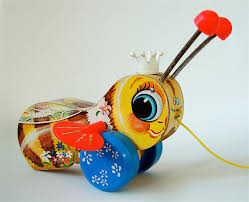 Postscript: Not every introduced species is problematic. Another case in point is the bumblebee. Four species of bumblebee was introduced from Britain at the turn of the 20th century to pollinate red clover. None of the native bees had long enough tongue to reach inside red clover flowers, but the imported bumblebees could do the job. Red clover is essential to sheep and dairy pastures. Over time, England’s bumblebee, Bombus subterraneus went extinct. Now beekeepers in England are working to reintroduce New Zealand bumblebees. The bumblebee also inspired a classic Kiwi toy.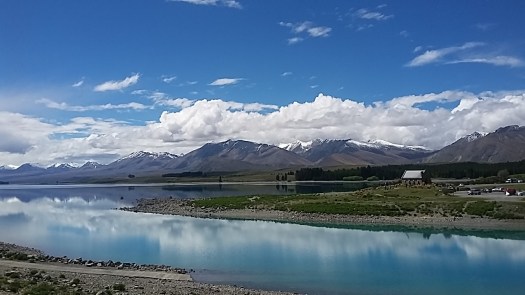




 We went straight to Ikeda’s to enjoy pie. Surprise, they serve breakfast and lunch too. I had a delicious western chicken sandwich combo and my mom a burger. Then we shared a piece of wild blackberry pie (yum) and tasted the french apple (too sweet). There is also a complete store of fruit, vegetables and other delicious foodstuffs.
 We then proceeded a short distance to

 americanjulie.com