Peace and Beauty at Joshua Tree National Park

Posing with Joshua Tree and rocks at Quail Springs

It takes a moment or two, and a couple of deep breaths, to acclimate to the beauty of the desert in Joshua Tree National Park. Then the peace of the place begins to seep in my bones and I can quiet my mind and appreciate what an interesting place this is. And I can hang out here for multiple days for the low entrance fee of $15 (per vehicle)–one of the bargains of our National Park system.

The Cahuilla people lived here for centuries, then after World War I, veterans with lung damage from mustard gas sought relief in the desert climate. By the 1930s, the human pressure on this special place was increasing and activist Minerva Hoyt persuaded Franklin D. Roosevelt to declare it a national park in 1936.  Today we can enjoy these special 794,000 acres where the Mojave and Colorado deserts converge under the careful management of the US Park Service.
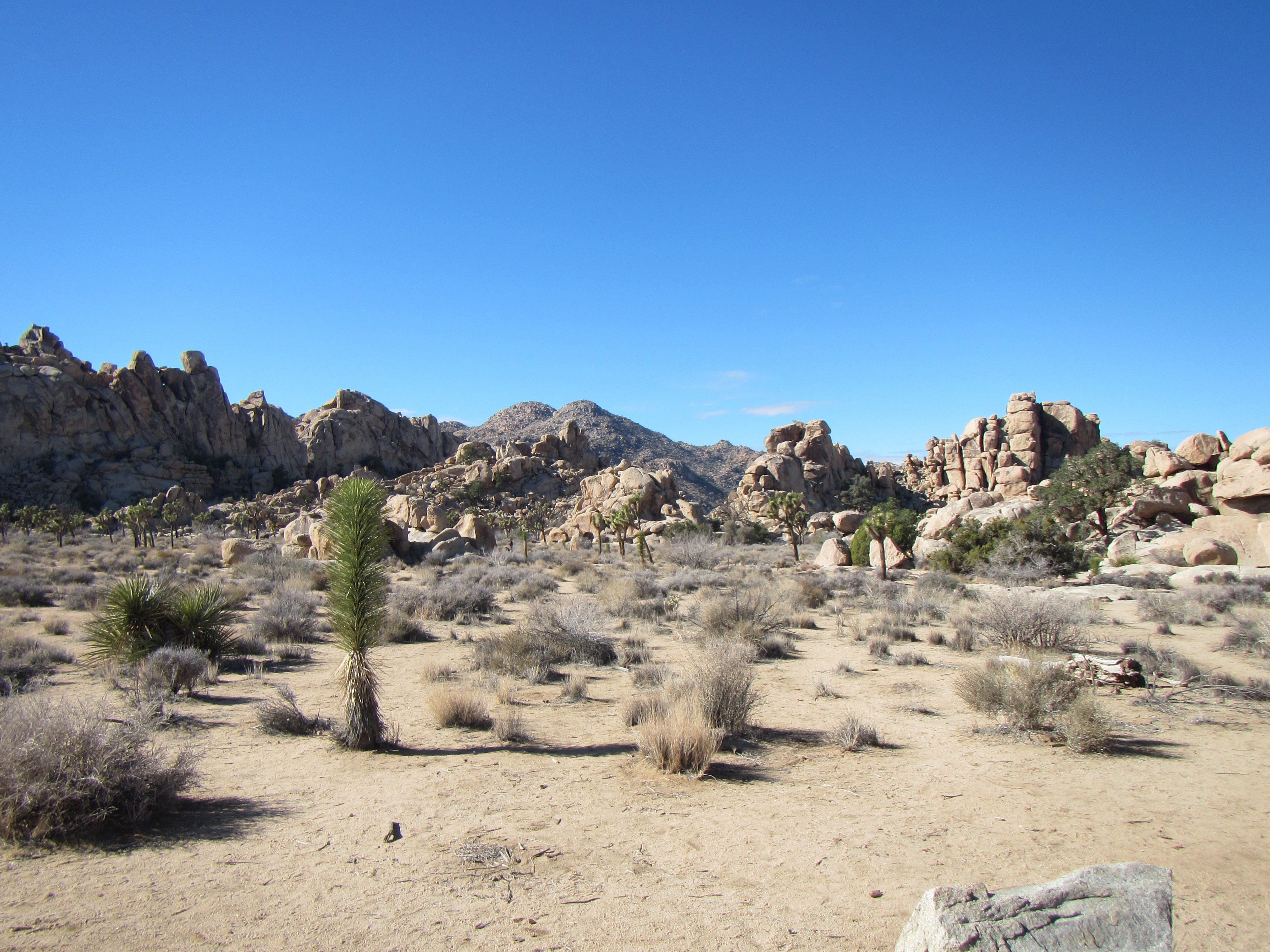
Hemingway Buttes are another climbing spot.

It is ideal to visit in winter as the temperatures are much milder than the 110 degrees+ of summer.  The days may be shorter but the night sky is glorious.  You can backpack, rock climb, horseback ride, walk, hike, and camp. The park is open 365 days a year, except when the government is shut down.

The famous Joshua Tree (thanks U2), is a member of the agave family with the latin name Yucca brevifolia. It is most associated with the Mojave Desert but it can be found in the Sonoran Desert and in the San Bernardino Mountains.  The Cahuilla used their tough leaves for baskets or sandals and ate the flower buds or seeds.  The plants are protected so if you want to plant a Joshua Tree when you get home, ask the visitor’s center about sourcing seeds.

There are a lot of wild critters that enjoy the Park. On our drive from the West entrance to Quail Springs, Hemingway Buttes and back, we saw a red-tailed hawk and common ravens. Spend longer in the park and you may see roadrunners, Bighorn sheep and desert tortoise.
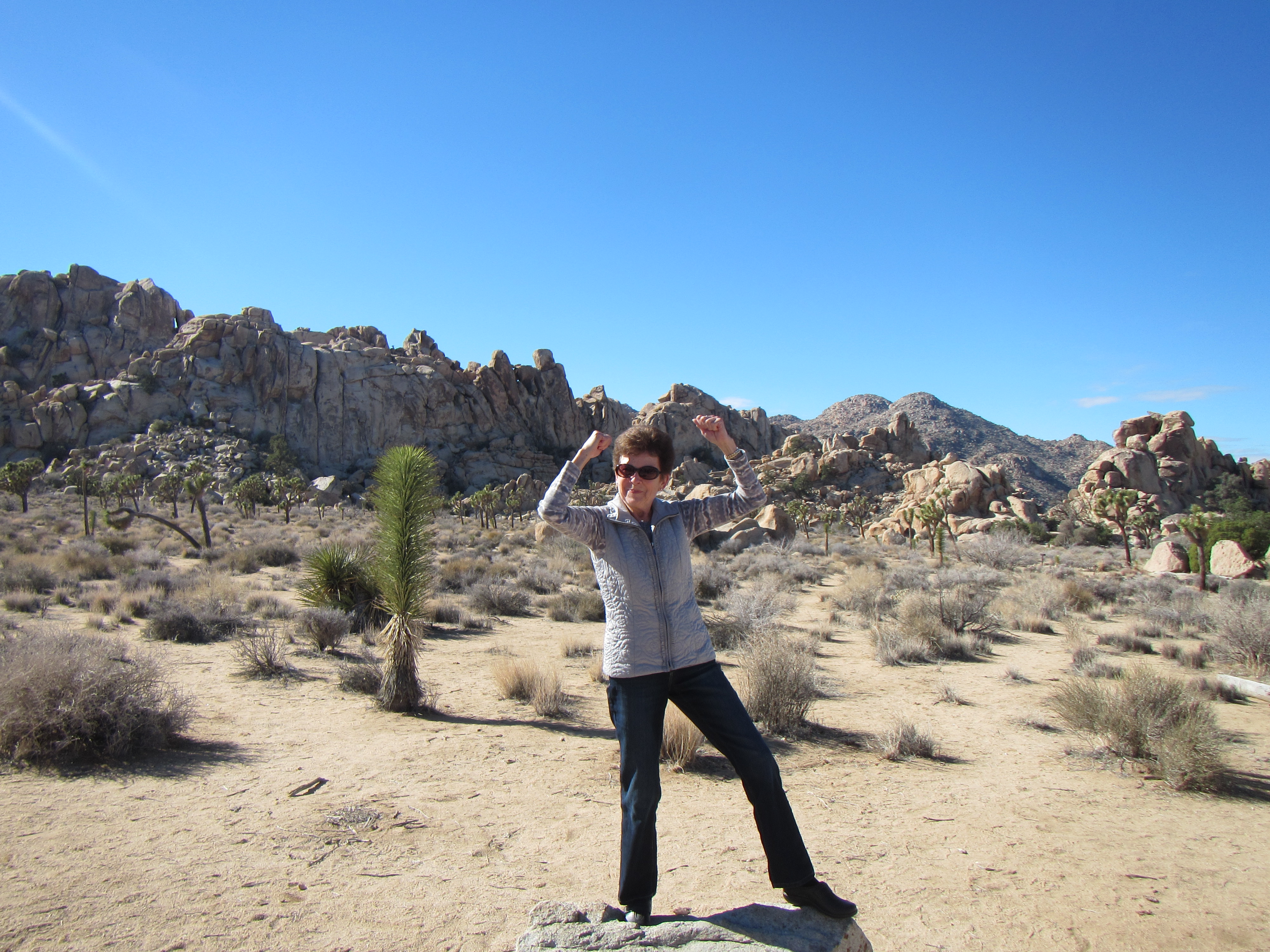
Climb on Auntie J!
Climb on Auntie J!

The rocks are more fascinating than the wildlife. These piles of granite have been left behind after centuries of erosion.  One of our party kept saying, “Who piled up all these rocks this way?” Um, God. Or time.  Officially the rocks were pushed up from below by volcanic activity eons ago. “As the granite cooled and crystallized underground, cracks (joints) formed horizontally and vertically. The granite continued to uplift, where it came into contact with groundwater. Chemical weathering caused by groundwater worked on the angular granite blocks, widening cracks and rounding edges. Eventually the surface soil eroded, leaving heaps of monzogranite scattered across the land like careless piles of toy blocks.” (National Park Service brochure)

I have visited this park many times and I never tire of it.  It is a must see and do If you are visiting the Palm Springs area.

Rockclimbing in Jo Tree

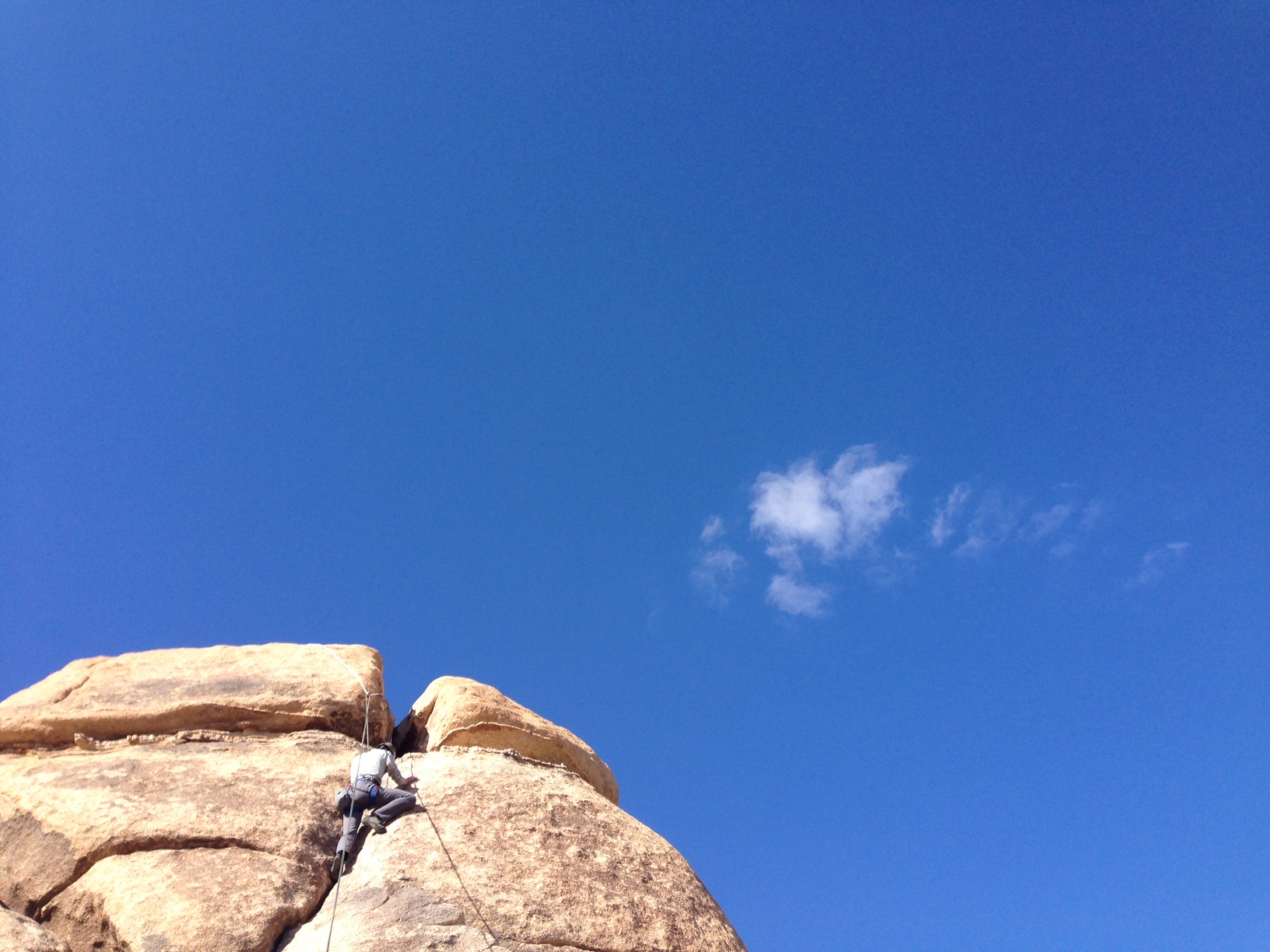
The azure sky is so clear we can see a jet stream from a passing plane for miles. The crisp November air and the warm sun, sand and rock are perfect for a climbing lesson for my two sons.  We are at Trashcan Rock in Quail Springs, Joshua Tree National Park.

Climbing Filch with an audience.

My brother Dean scrambled up the backside to set up the anchor and belay rope and then helped the young men get their shoes and other equipment together.  We watched my over-50 brother give us a climbing demonstration.  With great concentration and arm muscles tense and bulging, he climbed up the face using his feet and hands. We all mentally compared his physical exertion with our own fitness, and I found myself lacking.

Marcos climbed first. Marcos called out “Climbing,” and Dean replied “Belay on.” Marcos made it look relatively easy. He has climbed before but always in an indoor climbing gym, not on an actual rock.  Before too long he was approaching the top.

Joshua Tree NP, named after the unique plant, is a special place.

Tevis climbed next and he worked harder in the beginning to find a way to use his feet more effectively.  Learning to climb on a 5.6 face is challenging and each climber took breaks by “falling” and letting the rope hold them.

Marcos climbing Filch.

We relied on Bob Gaines, Best Climbs Joshua Tree National Park in the “Where to Climb Series.”  The first climbs were on the east face, “Filch”, which Bob Gaines suggests, “Begin off a boulder. Climb the wide crack to thinner jamming.” Then one of the other routes opened up so we moved around to the west face.

There are 13 routes on the west side.  We had time to eat fried chicken while Dean moved the anchor rope, or static line. Tevis climbed B2 next. He worked to stay out of the fissure while still using the crack to help him climb to the top.

Joshua Tree attracts climbers, hikers and picnic eaters from around the globe. Two Belgians were free climbing (no ropes) on other routes near us. A variety of people stopped to watch.  It is a calm, relaxing sport to watch—opposite of the intensity felt by the climbing team.

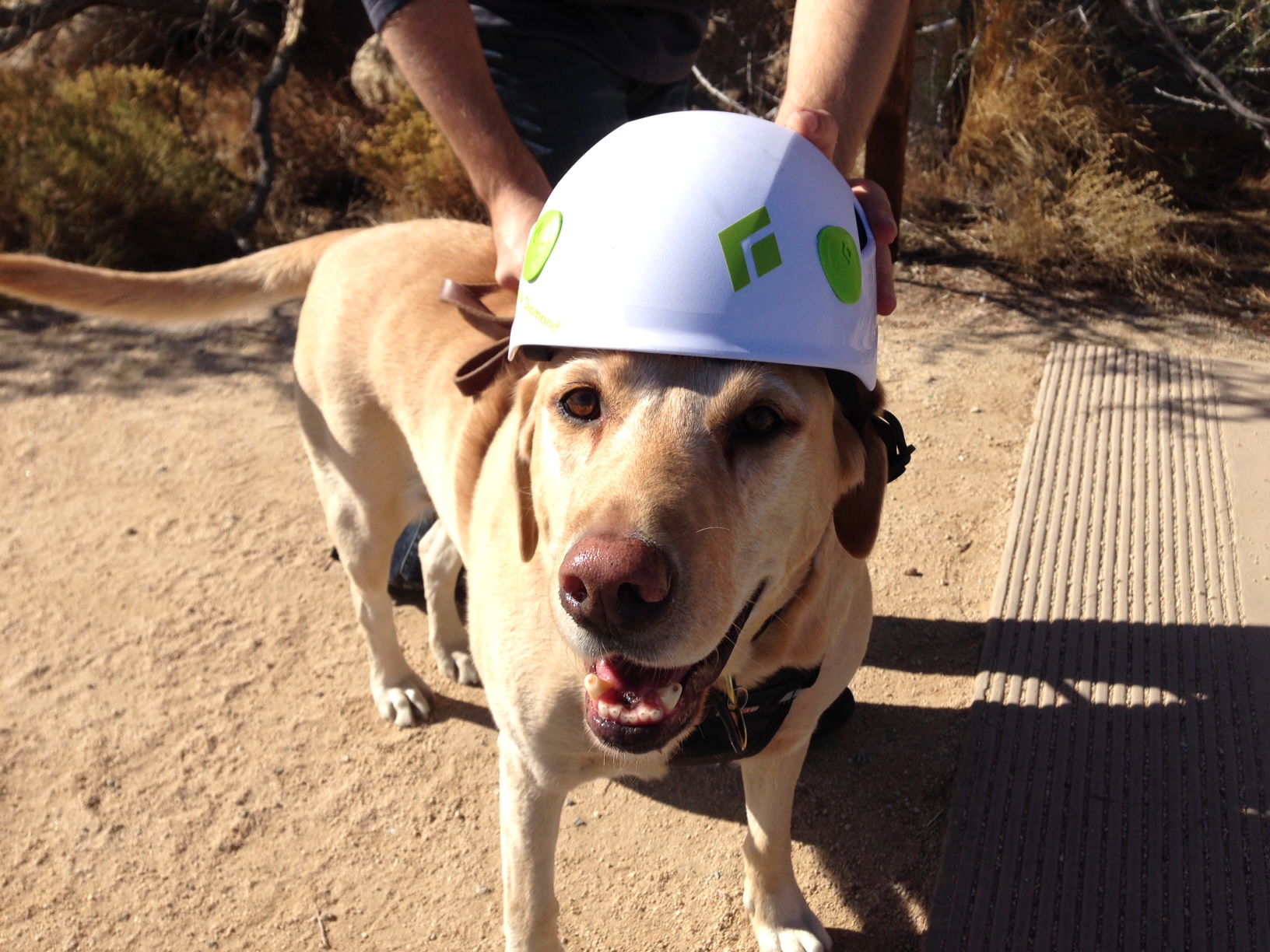
Everyone is safety conscious--including Nigel.
Everyone is safety conscious–including Nigel.

The biggest risk of rock climbing for the spectator is sunburn.  Do not be like me—remember your sunscreen.  The most common injury to a climber is scraped knuckles, called a gobie. Pack bandaids.

Joshua Tree National Park is 140 miles from Los Angeles and the nearest airport is Palm Springs. Accommodations are more limited and more affordable in Yucca Valley than greater Palm Springs.  The park entrance is $15 for a 7 day vehicle pass (bargain!).

Nomad Ventures in the town of Joshua Tree rents shoes and some gear; not harnesses or ropes.  I googled “rock climbing lessons, Joshua Tree” and 7 schools came up, so if you do not have a big brother who can teach you, check one of these out.