

The travel writing world is continually creating lists of where you should travel next. Barcelona, Morocco, Cape Town, or Singapore? It is too hard to decide, so you decide to go to Hawaii, again. (Or in my case New Zealand.) Vacations days are few and travel can be expensive, so it can feel like a big risk to try something like a safari in Kenya.
My recent New Zealand vacation is the first overseas trip where I have listened to podcasts everyday along the way. (I figured out how to download them on the podcast app Breaker when I have wifi access.) And on the Hidden Brain podcast from NPR “You 2.0: Decide Already!” Daniel Gilbert Stumbling on Happiness Harvard Professor, I learned why we might hit repeat instead of trying something new.
Imagine a future event, such as where you will live in retirement. Many of my friends have made decisions recently about retirement living with either a decision to stay in their long time home or a decision to move. One couple chose a active senior community with a beautiful apartment and lots of community activities and space; another couple chose a smaller but still gracious water adjacent apartment walking distance to many of their favorite places; another couple chose to stay in their longtime home but hire repairmen instead of the usual DIY. Each seems very happy with their choice. In each case it seems that they selected something not so distant from what their lifestyle was already because they were already happy.
When we think of the future we tend to focus on a few key details; and only one or two of the many, many details that are part of the experience. So they might notice the square footage of the apartment but not how many other apartments are on the floor and the number of daily interactions that it implies, or the pet policies and how that might impact you. I was impressed that the apartments in Meadowbank allowed a 90 day-no risk trial period. The community-oriented lifestyle is not for everyone and if you don’t get on with your neighbors it’s better for everyone if you opt out, rather than remain unhappily. I recently met a very lovely, cheerful 96-year old who exercised the opt out clause because she was being bullied at the senior community she tried.
Fortunately travel isn’t as high stakes as retirement living. Nonetheless, it is a real drag if your limited vacation time and savings involves a dud tour with obnoxious people. All the research might have pointed to an enjoyable experience, but we don’t know who we will be when we experience that event; imagination rarely matches the experience; we underestimate how much we’ll change. This happened to me when I tried to recreate the first Tour de France experience I had on Thomson bike tours . My experience with the group I traveled with in the Alps was so much fun, and a two of the couples were going to go on the Tour d’Italia. Alas the chemistry wasn’t the same within the group and I ended up counting the days till I was traveling on my own again. I enjoyed Venice even more for being free from the oppressive group dynamic. 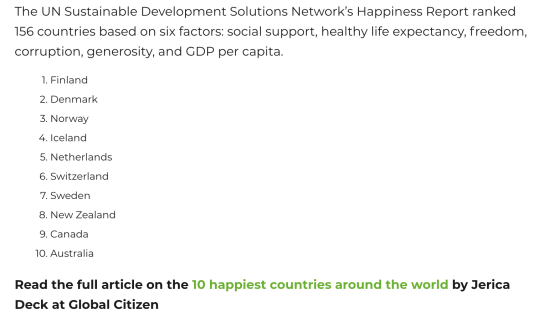
Don’t rely on imagination; look for data. Gilbert recommends finding measures of the happiness of the people doing what you think you might like doing. I have also found it really helps to know yourself and correctly apply the data to your situation. If you despise crowds then going to one of the “top 10 travel destinations” is probably not a good fit unless you can travel during off-season.
This Global Citizen ranking equated happiness with values I share: “What stands out about the happiest and most well-connected societies is their resilience and ability to deal with bad things,” said report co-editor John Helliwell, referencing New Zealand. “After the 2011 earthquake and now the terrorist attack in Christchurch, with high social capital, where people are connected, people rally and help each other and [after the earthquake] rebuild immediately.”
Gilbert also highly recommends using surrogation, that is relying on other people’s experience as a guide for your own. There are many platforms now that facilitate this: Yelp, Trip Advisor and others. Just remember even crowds can be biased; but you may share those biases. They are not perfect tools; however, 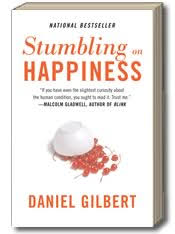 Trip Advisor can round out your imagination and give your more detail to consider. Maybe the experience you were thinking of adding to your itinerary based on a friend at Book Club’s recommendation is panned on-line by someone who found it claustrophobic. And you get claustrophobia.
Gilbert gave the example of choosing a movie–people prefer relying on the trailer over more detailed reviews by people who’ve seen it. We like to “trust our gut” because we live in the illusion of diversity (we are all so unique), when in reality, the reviews are a more reliable guide.
There is also a role in making a commitment to increasing our happiness. We think we’ll prefer keeping options open, but Gilbert’s research says committing to your choice will result in greater happiness. And we like a little mystery and surprise–not a a lot, just a little.
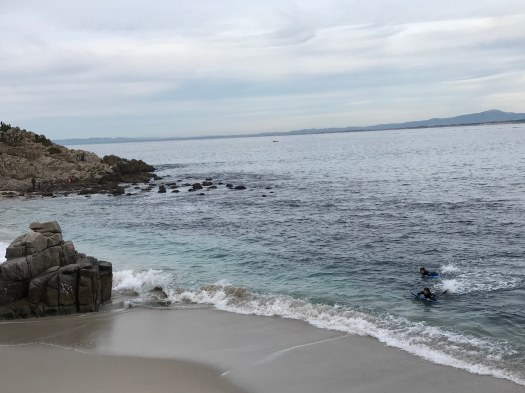
I choose New Zealand again and again. Similarly my adult children and I choose Monterey get aways every year, because I trust my own experience more than any travel writer’s opinion. I always have a wonderful experience when I go to New Zealand and I can create new adventures there so I still get some variety. I know that what makes me and my children happiest is beach access, trips to the Monterey Bay Aquarium and Gianni’s pizza. We are perfectly right to book another condo in Pacific Grove or Monterey. To put a cherry on top, add some mystery–new restaurants, or new beaches–and the research says you will be even happier.
This is what the research says. What’s your experience?








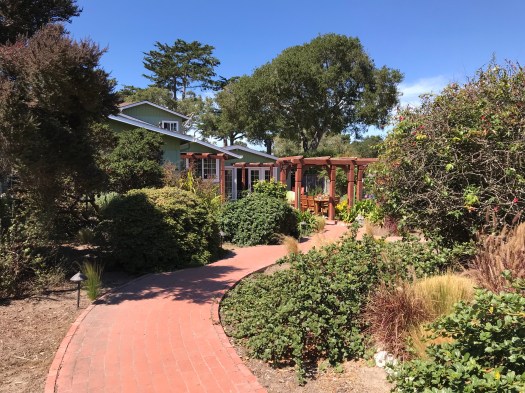



 When I lived here in the 80s, the prices were climbing well beyond the ability of people mostly working service jobs to afford to buy. Then the problem was that some of the supply was taken off the market by people who could afford to buy a second or third home on the Peninsula. They only spent a few weeks a year in Carmel or Pebble Beach and this had a ripple effect in the entire housing market. The Airbnb phenomenon makes it possible for upper middle class people to buy a vacation home and afford it thanks to additional rents.
 You may know that the Monarch Butterfly migrates thousands of miles in it’s life cycle. The caterpillar needs milkweed for food, the adult needs groves of pine, eucalyptus and cypress for overwintering. Their habitats have been reduced, chemicals in our environment threaten them, and their numbers have greatly diminished across the USA.
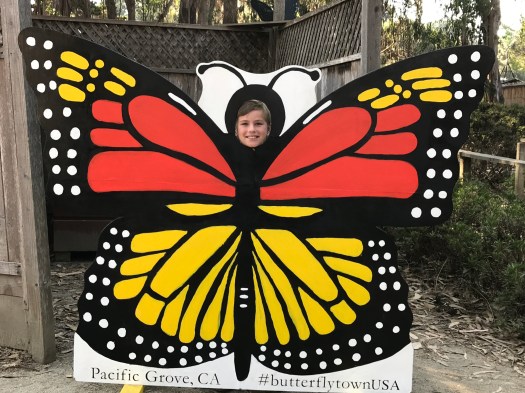 For several decades one town, Pacific Grove, California, has taken special pride in their protected
  The sanctuary is an easy walk from the main street in Pacific Grove (Lighthouse Avenue). There is parking and it is wheelchair accessible. Although there is an incline from one end to the other. There are fun activities for children and plenty of benches for all ages. And there is no charge for entrance.
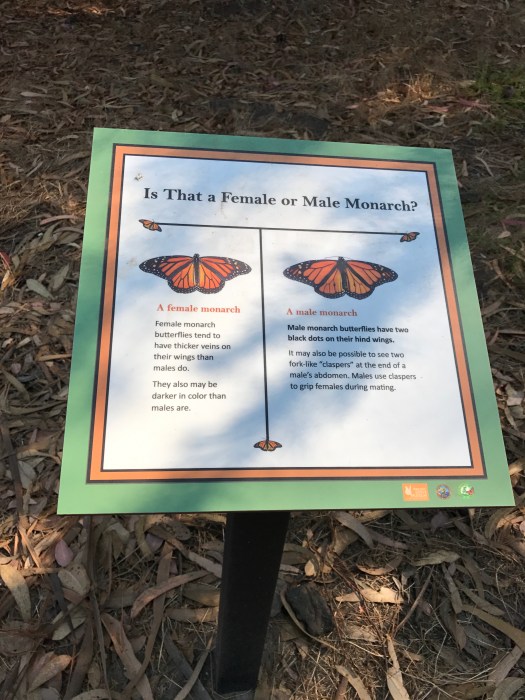 We took a picnic lunch and sat among the trees watching the butterflies dance high in the air among the tops of the trees. Occasionally one would drop down closer to us and alight on a branch and then we could try for a photo. It would have been more dramatic if we’d been able to see the clusters, but this was also relaxing and fun. We read the well designed signs to learn more about the butterflies and gained a new appreciation for these beautiful insects.


 americanjulie.com