

Have you been to Universal Studios or one of the other movie studio tours? I came awayf from my first studio tour marveling at how so many facades and stage props are so fake looking and yet look so real on film. I am happy to report that after seeing The Biggest Little Farm and then touring the real Apricot Lane Farms (the focus of the documentary), it is a match!

Located close to Simi Valley and the suburban development of Moorpark, you drive only a few minutes through orchards and hoop houses to reach Apricot Lane Farms. The contrast with the neighboring farms is most stark when you stand at Alan York Point (named for their mentor). On the next farm over there is nothing but bare ground as they clean up after an organic raspberry operation. The erosion on the hillside, the bare soil exposed to the Santa Ana winds, compared to a regenerative farm that is bursting with life.
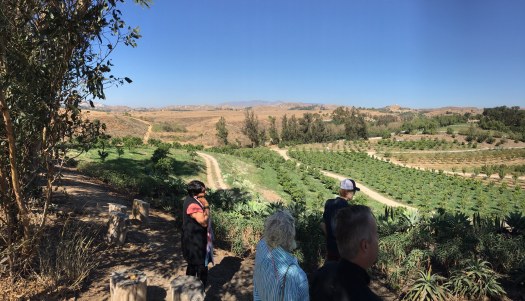
Apricot Lane Farms is both California Certified Organic and biodynamic certified. They grow and sell seasonal stone fruit, citrus, avocados, pasture-raised eggs, vegetables, herbs, marmalade, lamb, pork and beef through four farmers markets a week, a couple of individual grocery stores, and a couple of chefs. They do not currently have a selling problem; they have a supply problem. And they uniquely have a Los Angeles based market that can pay for the increased quality ($16 typically for a dozen eggs). They want to expand to three more farmers markets.

Co-owner Molly Chester experienced some health issues that led her to become a traditional food chef in Hollywood. She is still the most active partner in farm operations (John Chester is a film maker foremost). Her interests led them to Apricot Lane Farms and together, with their mentor Alan York, adopt these five pillars.
Apricot Lane Farm’s 5 Pillars:
- Soil health is the foundation for everything else…
- Growing the healthiest food
- Treating animals ethically and evolutionarily appropriate
- Regenerating the land
- Building community
They quickly discovered that uncovered soil is dying soil, so the cover crops are key and tilling has been almost entirely eliminated. In the garden, they sometimes cover the ground with plastic. Today, the only bare soil is the roadways, and the soil fertility in the pastures and orchards has recovered. At the beginning the soil was testing 1-3% organic matter and after 8 years the soils are testing between 3-6%, and the vegetable beds at 11%. For each percent increase in organic matter they are sequestering 21 tons of carbon per acre per year.

Trevor is the manager of the farming operation, and John Chester described his job as integrating the six farming enterprises. There is essentially the pasture, cow, chicken rotation; the orchard, duck, sheep rotation; the pigs stand alone, and the truck crops. The composting operation undergirds it all. And 15 bee hives spread around the farm are among the pollinators. Ten percent of the farm is set aside for habitat (mainly in and around the pond) but they are expanding this to 15% and already count over 100 bird species and 215 native plant species.

It is a unique operation because it does have revenue from entertainment (movies, shorts, children’s books, etc.). This is why the buildings are built to be aesthetically pleasing as well as functional. And they have a 12 person people mover for tours.
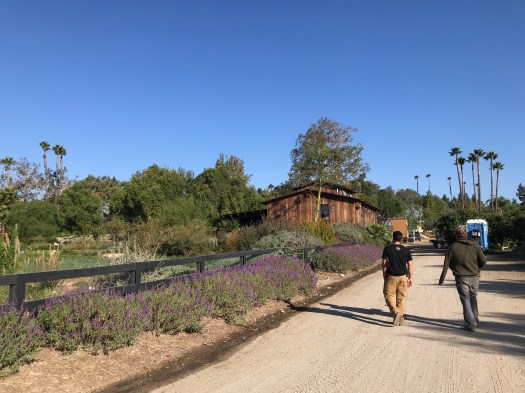
Apricot Lane Farms uses less water than the conventional counterparts. When they purchased the farm, Ventura County was in severe drought and everyone in the basin had their water use curtailed by 25%, but then they’ve been able to use 15-20% less. In addition, the are able to infiltrate rain water back in to the aquifer. This past winter when they received an above normal 24 inches of rain, they had no run-off except on the roads.
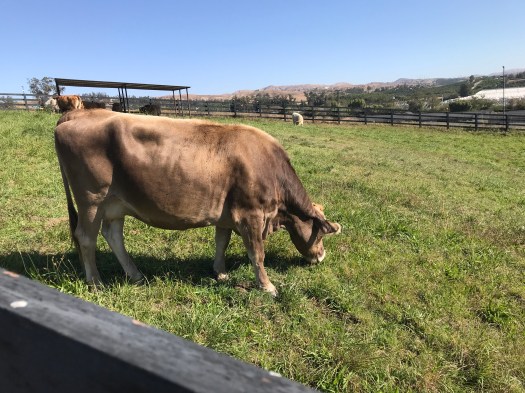
I easily geek out over agricultural stuff. You may be interested to know that the food grown on a regenerative farm is also more nutritional and tastier. It is also good to know that farming can be part of the climate solution.

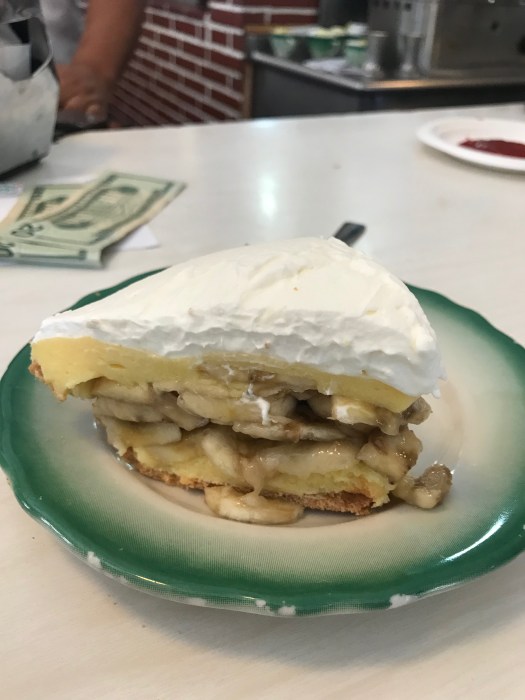


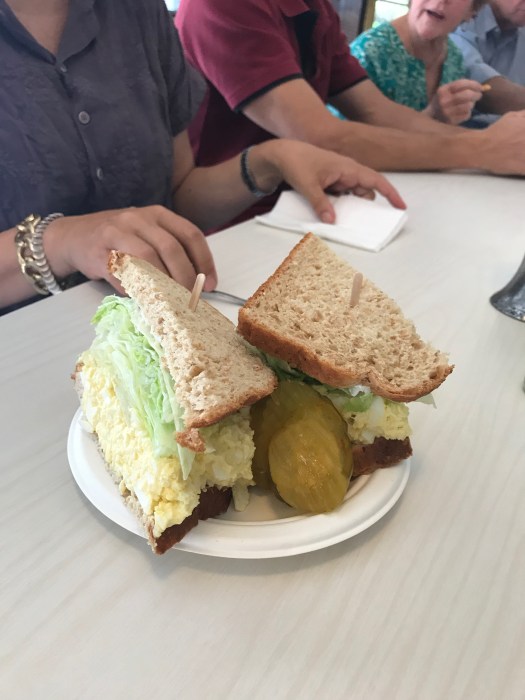
 The woman sitting next to me ordered an amazing looking egg salad sandwich. I asked if I could take a picture of it. This led to a lovely conversation. She drops in for lunch whenever she is in this part of West Los Angeles.
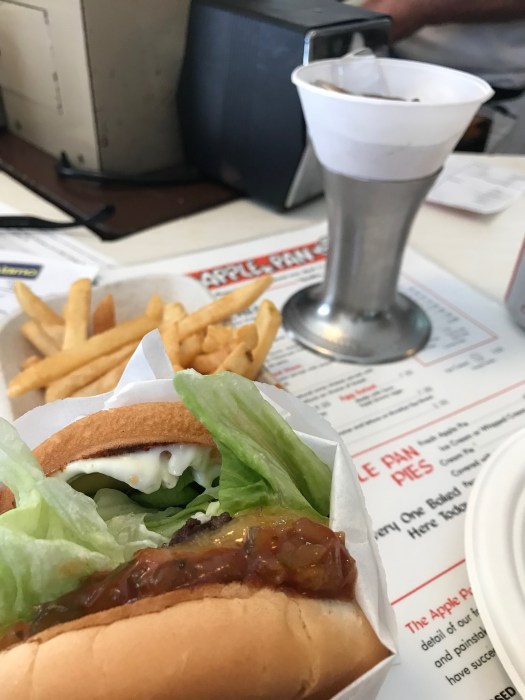
 I had dug through my travel files to find my issue of the now defunct Lucky Peach magazine Winter 2016 issue that focuses on Los Angeles. As I read it more carefully on the Southwest flight to Burbank, I kept running across mentions of The Apple Pan. Sammy Harkham calls the Apple Pan his personal favorite. He focuses on the burger: “The burger is, hands down, the best fucking burger in the world.”
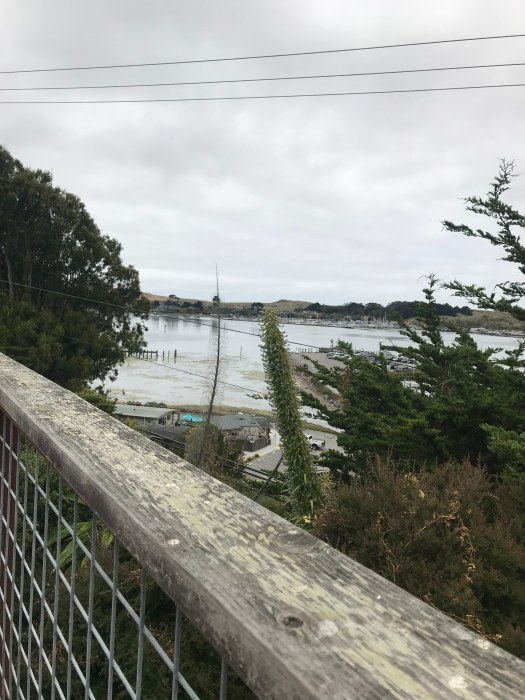
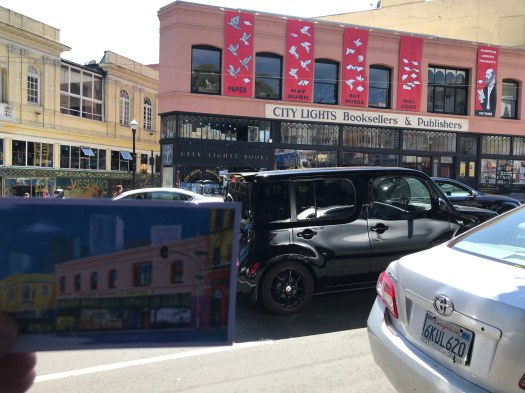


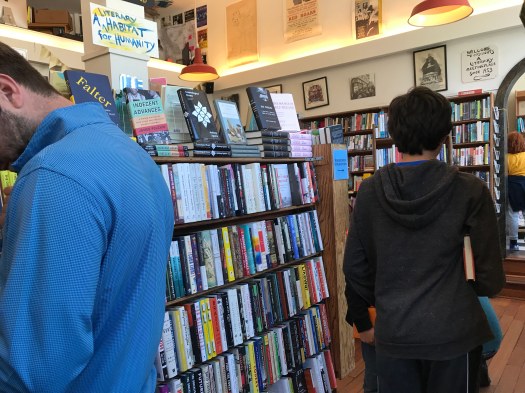 The store was busy! And jammed with books and staff picks everywhere. I could have spent so much more time there. Sadly I couldn’t stop thinking about the traffic congesting on I-80 while I browsed. So I made a bee-line to the cash register and asked the bookseller if they had Don’t Speak. He was so good he read my mind and said, “You might mean Say Nothing.” Yep, not the No Doubt song. He had several copies behind the counter.
 I enjoyed the walk back to the parking lot where it only cost $35 to get my car out of the parking lot after 3 hours. Ouch. Then I began the crawl out of the City. On my way in, it took 1.75 hours to drive from Sacramento to San Francisco. On a Friday afternoon it took 3.5 hours. That’s when I remember why I don’t go to San Francisco more often.




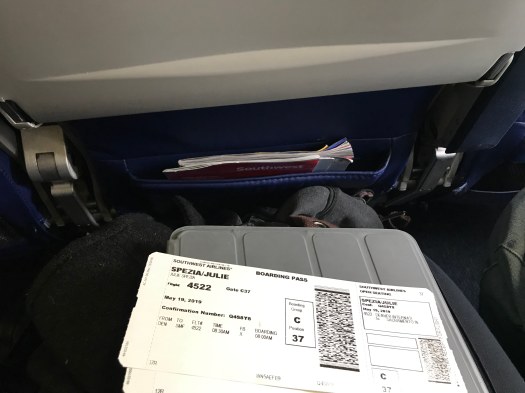 I had just debriefed with my son-in-law Marcos about his experience traveling as an airline employee to Barcelona. I was reminded of the importance of being patient in the face of delay, and kind to all airline employees. Not only did they not create the situation (fully-booked plane) and they are more likely to do what they can for me if I’m pleasant. Everyone I encountered was a professional and very friendly, but they are not responsible to get me on the flight. I am flying STAND-BY.
 On the way home I thought traveling on a Sunday would be easier. I had to rise super early to drive back to Grand Rapids for a 6:30 flight. There were open seats so they gave me my boarding pass in C group. And it all went well. When I arrived in Denver the C terminal was going crazy. It seemed like every gate was boarding. The gate agent said Sundays are always very busy. It was only 8:30 but it was already looking unlikely I’d get home that day. I found myself mentally checking: friend in Denver, yes. If she’s not home I can stay at a hotel and get some sleep!
 I texted my family that I made it! Remarking on my good luck, my son-in-law texted back, “When you get back buy a lotto ticket on the way home. lol” I took his advice but my good fortune didn’t last that long.
 This weekend I spent Saturday afternoon enjoying what my hometown has to offer. Sacramento has invested in protected bike lanes and traffic safety. And now the Jump scooters and electric bike programs are fully implemented. I rode my own cruiser round town and couldn’t help but smile at the number of people enjoying the bright red Jump scooters and bikes. Why not? The sun was shining and a light breeze kept the temperature in the 80’s. Trees are leafing out on every avenue, roses around the capitol are heavy in bloom, and the rivers are running full.


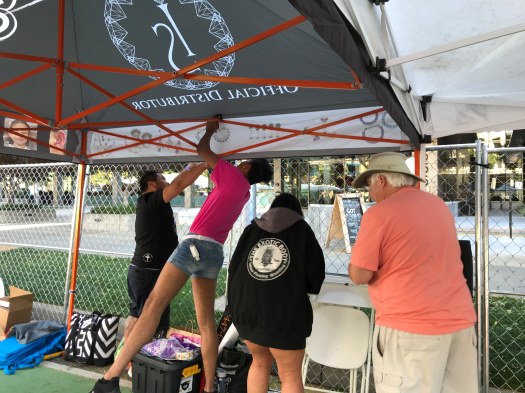
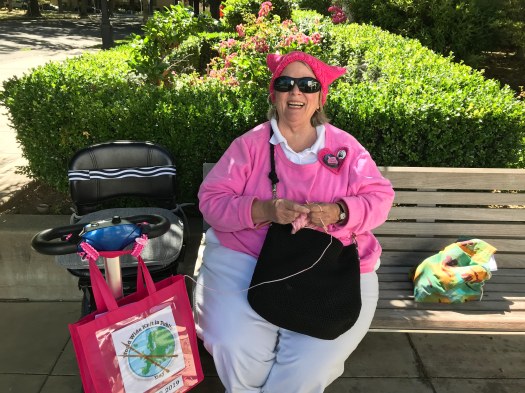
 My destination was the River Walk Park in West Sacramento. It is just across the Tower Bridge (on the other side of the river from Old Sacramento state park). The City of West Sacramento has done a great job developing their side of the Sacramento River. I was going to listen to my friend Nailah Pope-Harden speak at the March for Science. It made a great setting, but I wondered if participation was dampened at all by people who aren’t familiar with the River Walk Park. It was my first visit.


 americanjulie.com