Paripuma, An Extraordinary Garden

IMG_9306
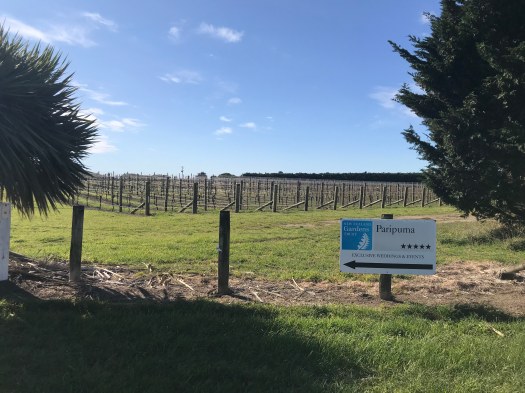
Paripuma is located in the heart of the Marlborough wine district, on the shores of Queen Charlotte Sound near Blenheim, New Zealand

Do you love gardens? You don’t have to love gardening (the sweaty, getting dirty bit) to appreciate a great garden but it helps. With dirt under your fingernails, you quickly deepen your appreciation, because you realize the role that climate, soil, and cold hard cash play in creating a garden. Time is also required for plants to mature and reveal the vision of the gardener. The garden is ultimately the result of hard work for hours and hours every week in all sorts of weather. You might be able to hire labor, but the only guarantee of success is to do a lot of it yourself. Finally, the creative spirit is revealed. Just as not every painting is a masterpiece, not every garden is world class.

IMG_9414

Paripuma is world class.

IMG_9312
Rosa started with clay and gravel. She said that as soon as she planted native plants she began to see the soil come alive.
IMG_9417
A great garden relates graciously to its home and other buildings. 

The gardener Rosa Davison is a classic self-effacing Kiwi. She lets her garden speak for itself. Since 1999, she has transformed a landscape that would have said “hopeless” to a normal person. She had a different vision. Over time it expanded to include a second home and transformation of home #1 into accommodation. Exploring the various rooms of the garden and walking through the buildings, I don’t see evidence of any ugly mistakes. I suspect that Rosa’s eye for beauty has resulted in a consistent and enduring quality. She also has painted her landscape with native plants and New Zealand has a lot to offer.

IMG_9348
Kitchen garden in winter. 

She is currently pursuing a passion for butterflies and pollinator plants. Her intense enthusiasm, that is less articulated in words and expressed in plants, is the mark of an extraordinary gardener, as is her evolving interests.

IMG_9331
I forgot to ask Rosa the name of the grey shrubs that provide contrast and structure in the middle frame. She responded: The plant is Muehlenbechia astonii … It became quite rare in the wild (from stock grazing)  but is now much planted in gardens and sometimes on median strips. It is interesting as it is ‘divaricating’   – which means its little branchlets turn in on themselves to become never-endingly tangled – something a lot of NZ plants do – especially when juvenile! Apparently this was to protect themselves from browsing moas ! Truly ! Often when they grow higher (out of reach of the moas) their foliage completely transforms ie lancewoods (Pseudopanax ferox).

A world class garden also inspires, and I was impacted by the garden. I noted ideas I want to include in my much smaller, very different garden, such as including plants that in winter offer contrast and structure. The biggest discovery was the side aisle to the main show that extends from the house toward the sea. I paced it out and the main garden has a 30 “foot” swath of lawn down the middle, whereas the side garden is just 10 feet. I realized I think small. I would feel audacious to create a ten-foot aisle, and yet the impact is when you go big. That takes moxie! Why am I reluctant to express my vision? I need to stop self-editing and create the garden I love.

My adventure started with a book called Gardenlust by Christopher Woods, I saw that there were three gardens in New Zealand and I began researching if I could visit whilst here. Paripuma is the only garden open in winter (recall that the Southern hemisphere is just peeping into Spring in September). I also discovered that I could actually stay in accommodation and enjoy the garden at my leisure. I quickly reorganized my plans to begin my NZ adventure in Blenheim with a two-night stay at Paripuma. You can too. Indeed, if your budget can manage (it is really good value) and you are looking to relax, then this is a unique experience and Mike and Rosa Davison are terrific hosts.


Blenheim is Beautiful Wee City

Blenheim is in the heart of the Marlborough wine district. It is a popular destination for wine tasting, weddings, or a romantic get-away. And people live here (about 26,000). Their town is practical. I enjoyed the sewing shop and the ladies at Whitcoulls bookshop and their reading suggestions. Then I was looking for the information centre and I got a little lost and so discovered the most charming part of town.

IMG_9292

This beautiful urban space is part of a redevelopment of the rail way into a trail and park. The beautiful government building and creative use of gabion retaining walls in the landscaping inspire.

6440921_MAIN_1565019617The lovely ladies at Whitcoulls helped me find a couple of books by New Zealand authors. I read When It All Went to Custard by Danielle Hawkins in the next 24 hours and enjoyed it. Perfect to revel in a farm-town romance n the middle of an all-star agricultural region. Now I’m reading their second recommendation, The Ice Shelf by Anne Kennedy.

My plane landed from Auckland at 9:30 a.m. It took no time to exit the plane and pick up my bag. The only snag in my plan was collecting my rental car from Europcar. There was no one at the office, and multiple attempts to contact didn’t result in a response, so after 1.5 hours I canceled my reservation and rented from Budget (and saved money!)

IMG_9286What worked like a charm was my visit to Blenheim’s top pie baker, The Bureleigh. I enjoyed a steak and blue cheese pie for lunch at the picnic bench outside the shop. I sat in the winter sun questioning whether I needed my winter wool coat, and so thankful I visited Blenheim.

Do you wear a watch on vacation?

IMG-9207

Do you wear a watch when you travel? Or do you rely on your phone as a timepiece?

I am planning the last minute details of my New Zealand trip at the end of the month. I am not going to bring my watch. At first, my reason was primarily the hassle of keeping it charged with its own charger (thanks Apple). Then I began reading a book about different concepts of time and how they affect our relationships with God and others in Becoming Friends of Time by John Swinton. The first chapter is about o’clock, a concept I first explored with my friend UK Sarah. She and Roy are very o’clock and I realize that I have become very much so since I left New Zealand. When I was living there in 2011, I was redesigning my life and intentionally being instead of doing. Now as a consultant my life is defined so much by $ per hour that I’ve lost the stake of my redesign (and it is Sarah and Roy who are being more than doing).

I am so looking forward to my two weeks in New Zealand, and yet my joy is dampened by worrying about the time I won’t have to earn $/hour. I justify my trip by plans to work on my penguin viewing guide. Why is it not enough to be in beautiful places and enjoy friends and make space for meeting new friends?

BecomingFriendsofTimeAs Swinton writes:

The desirable state for human beings living within Standard Average European Time is to be able to handle the economics of time efficiently in a world that adores speed, loves intellectual prowess (quickness of mind), and worships comfortably at the altar of competitiveness, productivity, efficiency, and self-sufficiency (using your time well on your own behalf). The implication is that to live humanly is to live one’s life effectively according to a series of culturally constructed time tracks that are laid out according to the fixed and relentless rhythm of the two-handed clock… (p 31)

I want to glean the benefits of living in this moment, and this moment, and this moment. “Living in the present moment” is a catch phrase popular among new agers and Oprah fans. Yet few of us manage it on a regular basis. Vacations are unique opportunities to do this if we allow ourselves to move with an open schedule.

I am going to fly to Auckland and then on to Blenheim. The first two nights are reserved for experiencing an amazing garden and then I’m traveling with only a few set points on the calendar. My day on the Dunedin peninsula is scheduled so I can be sure to try a particular restaurant and see Yellow-eyed Penguins. Again, when I’m in Auckland, I have a few days set apart and the rest is very much open.

I realize that I’ve moved much farther than I ever intended from my redesign. I was right to think more would be possible in New Zealand than if I stayed in the United States. My return trip gives me an opportunity to reexamine my priorities and reset the clock (haha).

It may sound a little crazy but I believe God also gave me the gift of Grand Designs (on Netflix or BBC 4), Season 15, Episode 9. This episode follows a family in Hertfordshire who crafted their house for 10 years and they still were not finished. The first time I watched it I had so much judgement, and then I watched it again and I began to feel envy, and then I watched it again and I felt inspired.

Stay tuned and I’ll let you know how my intention to be present works out on this Kiwi Adventure. And I’m definitely not taking the watch.

What Should I Read Before My Next Trip?

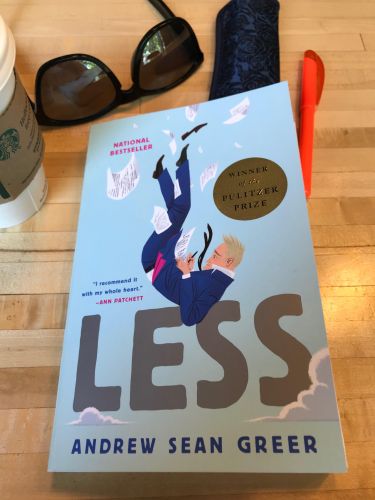
LessJust read the novel Less in under 24 hours. I had to find out what happened next, then discover the ending. Andrew Sean Greer won the 2018 Pulitzer for fiction with this travel novel. Most booksellers will rightfully shelve it in fiction. I have placed it with my favorite travel reads.

Similar to Eat, Pray, Love, Elizabeth Gilbert’s bestselling memoir, it is the tale of an author traveling the globe to escape heartache and to find oneself. Except that Arthur Less is fictional. In this story Arthur learns to love himself a little more as he turns the big 5-0. It also gave me insight into gay culture. The author also exploits the advantage of a narrator who seems to be in Arthur’s head. We travel with Arthur from San Francisco to New York City to Mexico to Turin Italy, to Germany, to Morocco, to India, to Kyoto Japan to the Vulcan Steps in San Francisco. The descriptions are delightful, awful, and sometimes also funny, depending on the circumstance.

I have started to highlight “sparkletts” that I love rolling off my tongue or around in my head. Samples from Less include: …that crazy quilt of a writer’s life: warm enough, though it never quite covers the toes …what he met were not young Turks but proud bloated middle-aged artists who rolled in the river like sea lions… The kind of guy who wore his bicycle helmet while shopping…knuckle-whitening rattletrap wellspring of trauma.

It got me thinking about the various books I’ve read to prep for travel or to temporarily satisfy the need for travel in my life. My favorite travel authors whose work I’ve read EVERYTHING include: Bill Bryson Notes from a Small Island, and Tony Horwitz Confederates in the Attic. I just learned that Tony Horwitz has a new book coming out May 14, 2019: Spying on the South. (Just preordered!)

I consume a lot of podcasts. One of my favorites is What Should I Read Next? with Ann Bogel. And I was thinking about promoting the release of my travel guide for planning your own civil rights crawl. I thought about applying to be a guest–and there is a questionnaire to complete–so I’m practicing here. The topic I would want to discuss with her is travel literature. Not guidebooks, per se, but the broader idea of books where the characters or author travel. Steinbeck’s Travels with Charley is a classic, but there are many more that take a little effort to find.
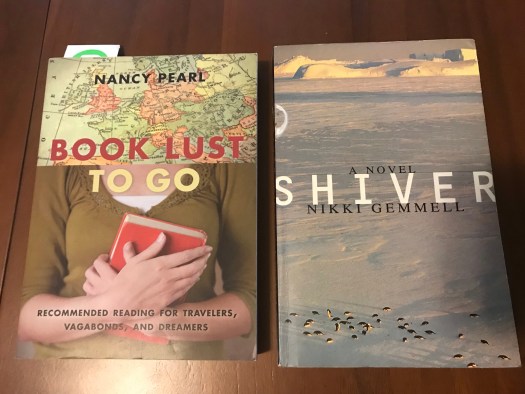
IMG_7759You may also find suggestions for the place you are traveling next from Nancy Pearl’s Book Lust to Go. I have found some terrific books from her recommendations and some duds. Sometimes I discover that my interest in, say Norwegian, literature is limited. One of her recommendations is in my top three travel books I love:

1. Come On Shore and We Will Eat You All by Christina Thompson, a New Zealand story.

It is hard to choose among so many great books, and yet I remember #2 book having a tremendous impact on me, perhaps because my heart was already tenderized by Isak Dinesen and Beryl Markham classics.

2. Looking for Lovedu by Ann Jones, a memoir of traveling from Africa top to bottom

Choosing the third book is really tough because there are so many options. I only have one continent left to visit–Antarctica. I have read the journals of explorers and book about penguins by scientists. When I was in Australia I discovered #3 on my list.

3. Shiver by Nikki Gemmell, a novel set in Antarctica

Ann Bogel also asks her guests for one book they hate (or didn’t care for if you hate the “h” word, haha). This is harder to select because some years ago I learned to abandon books I do not enjoy. In knitting an abandoned project is “frogged” so I write this in my the back of my journal with a note why. I had to rack my memory for a travel book I abandoned or read with a sour face. In college I tried reading something by Paul Theroux. I can’t remember exactly what but I was completely turned off by his tone of disdain for the place or for the reader or both, my memory is fuzzy after 35 years. Nancy Pearl tried to convince me to give him another try, but alas, one chapter in a book store and I returned The Great Railway Bazaar to the shelf. I will provide a more current answer though. After PBS began showing The Durrells television series, I mentioned to someone that I didn’t enjoy the show as much as I hoped (I love Keeley Hawes mostly). They said, “Oh, you have to read the book it’s based on! I loved it.” So I dutifully bought Gerald Durrell’s My Family and Other Animals about their life on Corfu and waited for it to get good. And waited. And waited till the end. It’s not for me.

Ann Bogel also asks guests what they are reading now. I have several books on the go, but in keeping with the theme of travel, I am reading next: Washington Black by Esi Edugyan. This stretches the theme of travel as it is historical fiction involving travel by hot air balloon.

If Ann Bogel asked me what I’d like to be different about my reading life, I’d be hard pressed. I love the variety of my reading, and the amount I read. I enjoy both printed books and e-books. I listen to a lot of podcasts but I’m not that keen on listening to books. Although sometimes the narrator experience tempts me–like when I heard a review of Lincoln at the Bardo–a book I struggled to read and keep the characters straight. Hearing Liz Dolan recommend the audio version with dozens of actors sounded like fun. I don’t like headphones either, so that makes it hard to listen to books on planes or in public. I was feeling bad about not getting more books from the library until I heard one of her guests refer to her book buying as being a patron of the arts. That’s me! Plus when I buy them used from Time Tested Books, or new from Avid Reader, I can share them with my mom and others and keep my local bookstores open.

I write this blog to inspire travel. I am pushing myself into writing travel guides, where I am much less comfortable, because I want to help people design their own more off-beat adventures. Just as Arthur Less and Elizabeth Gilbert learned aspects about themselves that they’d never had known if they had not left home, I always discover so much about what I love, what’s not for me, and what I want to do next when I travel. And always, I pack books I can leave behind so I can lug more books home that I discovered along the way.



Celebrate Penguins!

IMG-7479
Art from a greeting card; originally in London Tube advertisement to entice you to ride subway to the London Zoo.

April 25th is World Penguin Day! People in Australia and New Zealand may already be celebrating!

I adore penguins. I will extend my celebration until Saturday when Mom and I are going to see the new film, Penguins.

Gutted for Christchurch and New Zealand

IMG-0695

This is an emergency blog to express my dismay at the Mosque attacks in Christchurch by white supremacists. Part of me doesn’t want to believe it because the New Zealand people I know and love are so far removed from this hate. Just look at the example of the Prime Minister Jacinda Ardern’s leadership in the days following the attacks.

These fellas were hanging out in St Heliers on my last visit. Chillin’. This is what I believe better represents the Kiwi spirit. IMG-0783

I heard people make racist remarks in bars and in unguarded moments–made by much older people and never with any intent to do physical harm. I’d heard worse in the US, but as we witness in the United States, these attitudes are pernicious and difficult to change without real effort by everyone in society: education, neighbors, political and business leaders.

IMG-0793One of my favorite memories of New Zealand was in the community hall in St Heliers. They adopted the USA for the 2011 Rugby World Cup and the town was festooned in stars and stripes. The village hosted a celebration with the US Consulate and everyone was invited. A young woman sang the New Zealand national anthem and it was the first time I’d really listened to the words. I was so moved. It summed up the complicated beautiful people that I met throughout the North and South Islands. It is always sung in both English and Maori before the rugby test matches. Tonight I am saying it as a prayer for Aotearoa.
English “God Defend New Zealand” Māori “Aotearoa” Māori “Aotearoa” translated

1. God of Nations at Thy feet,
In the bonds of love we meet,
Hear our voices, we entreat,
God defend our free land.
Guard Pacific’s triple star
From the shafts of strife and war,
Make her praises heard afar,
God defend New Zealand.

2. Men of every creed and race,
Gather here before Thy face,
Asking Thee to bless this place,
God defend our free land.
From dissension, envy, hate,
And corruption guard our state,
Make our country good and great,
God defend New Zealand.

3. Peace, not war, shall be our boast,
But, should foes assail our coast,
Make us then a mighty host,
God defend our free land.
Lord of battles in Thy might,
Put our enemies to flight,
Let our cause be just and right,
God defend New Zealand.

4. Let our love for Thee increase,
May Thy blessings never cease,
Give us plenty, give us peace,
God defend our free land.
From dishonour and from shame,
Guard our country’s spotless name,
Crown her with immortal fame,
God defend New Zealand.

5. May our mountains ever be
Freedom’s ramparts on the sea,
Make us faithful unto Thee,
God defend our free land.
Guide her in the nations’ van,
Preaching love and truth to man,
Working out Thy glorious plan,
God defend New Zealand.

1. E Ihowā Atua,
O ngā iwi mātou rā
Āta whakarangona;
Me aroha noa
Kia hua ko te pai;
Kia tau tō atawhai;
Manaakitia mai
Aotearoa

2. Ōna mano tāngata
Kiri whero, kiri mā,
Iwi Māori, Pākehā,
Rūpeke katoa,
Nei ka tono ko ngā hē
Māu e whakaahu kē,
Kia ora mārire
Aotearoa

3. Tōna mana kia tū!
Tōna kaha kia ū;
Tōna rongo hei pakū
Ki te ao katoa
Aua rawa ngā whawhai
Ngā tutū e tata mai;
Kia tupu nui ai
Aotearoa

4. Waiho tona takiwā
Ko te ao mārama;
Kia whiti tōna rā
Taiāwhio noa.
Ko te hae me te ngangau
Meinga kia kore kau;
Waiho i te rongo mau
Aotearoa

5. Tōna pai me toitū
Tika rawa, pono pū;
Tōna noho, tāna tū;
Iwi nō Ihowā.
Kaua mōna whakamā;
Kia hau te ingoa;
Kia tū hei tauira;
Aotearoa

1. O Lord, God,
Of all people
Listen to us,
Cherish us
May good flourish,
May your blessings flow
Defend Aotearoa

2. Let all people,
Red skin, white skin
Māori, Pākehā
Gather before you
May all our wrongs, we pray,
Be forgiven
So that we might say long live
Aotearoa

3. May it be forever prestigious,
May it go from strength to strength,
May its fame spread far and wide,
Let not strife
Nor dissension ensue,
May it ever be great
Aotearoa

4. Let its territory
Be ever enlightened
Throughout the land
Let envy and dissension
Be dispelled,
Let peace reign
Over Aotearoa

5. Let its good features endure,
Let righteousness and honesty prevail
Among the people of God
Let it never be ashamed,
But rather, let its name be known
Thereby becoming the model to emulate
Aotearoa

From Wikipedia.

Celebrating Penguin Awareness with Dr. Michelle LaRue


penguins
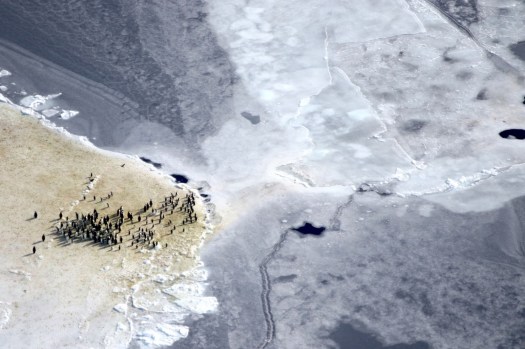
Estimating populations of penguins is a challenge given the ice even in summer. Can you tell the difference between Adelie and Emperor penguins? Photo from https://emperorpenguinchange.blogspot.com/

Dr. Michelle LaRue is an ecologist and science communicator who specializes in using Geographic Information Systems, satellite imaging and other tools to count penguin, seal and mountain lion populations. I follow @drmichellelarue on Twitter—I especially enjoy her #Cougarornot game. She recently moved from the University of Minnesota to the University of Canterbury in Christchurch, NZ. This new adventure includes research opportunities in Antarctica.

The USA and New Zealand have a history of collaboration in Antarctica. The McMurdo research station is just down the road from the Kiwi Scott base, and both are supported from Christchurch. Dr. LaRue agreed to answer questions about this new opportunity.

Q: You’ve done research in Antarctica whilst maintaining your University home base at University of Minnesota. What prompted the move to New Zealand?

A: A faculty position with Gateway Antarctica at the University of Canterbury! Here I will continue my research on the ecology of Southern Ocean predators and look forward to building a lab in the next few years.

Q: From your new position, what do you hope you’ll be able to contribute to our understanding of penguins and the endangered polar habitats?

A: My goal is to effectively fill in the pieces of the puzzle that are missing – we’ve got several baseline population estimates now for Adélie and emperor penguins and we’re doing the same for Weddell seals and crabeater seals. Once those pieces are filled in, we get to start asking: why? Why are these populations in certain spots and not others? How do these species interact with each other across space and time? How might climate change impact their populations and habitats? To ask these questions we first need to know how many animals there are and where they live, so that’s my focus at the moment.

Q: Have you experienced an earthquake yet in Christchurch? And what is your favorite discovery about living in New Zealand?

A: For the first time, I felt a 3.2 earthquake back in December, though I will say the people around me didn’t even notice! I think my favorite discovery or realization is just how unbelievably beautiful it is – I mean this is something I knew before but now that I live here it’s remarkable to me how much diversity there is in the landscape in just a short distance. It’s an incredibly beautiful place to be an outdoor enthusiast!

Recall that it is currently summer in Antarctica, so she was in the field this past November. You can follow her team’s current research at https://emperorpenguinchange.blogspot.com/. Dr. LaRue also has links to a number of her video presentations and written papers on her website.

Dr. LaRue works on teams gauging the status of Adélie and Emperor penguin populations in Antarctica. There are things we can do to reduce human impacts on penguins and their habitat. First, more efficient fishing vessels are harvesting the krill that makes up the food supply of penguins and whales. It is important that we stop using krill oil (I didn’t realize this was a thing; however, a quick Google search and apparently lots of people are taking it as supplements). Second, the ice is shrinking in both polar regions due to rising ocean temperatures from rising CO2. We can all reduce our use of fossil fuels by riding a bike, walking, or carpooling.

Christmas Recipes from Abroad

IMG_6478 (1)
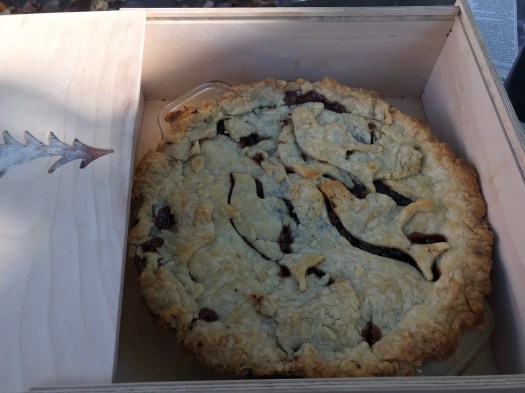
The mincemeat pie I baked for Jim Adan. I used my favorite pie crust recipe that uses Crisco.

Christmas is an inspiring time for baking. I usually focus on pie but I never liked mincemeat pie. Until I spent a Christmas season in New Zealand and fell in love with mince pies (a tart size version). Kiwis sell them in coffee shops, in the grocery store in 6 and 12 packs, and at church bake sales. When I was in Ireland I fell back in love with mince pies at Starbucks of all places. Their shortbread crust and mince is the perfect combination.

Plus my art dad Jim said all he wanted for Christmas was a mincemeat pie. In the past I’ve tried mincemeat from a jar. Even the fancy stuff leaves me “meh”. I looked at the prepared mincemeat sold in the Powerscourt shop and also knew I didn’t have room in my suitcase. So I asked my friend UK Sarah if she had a recipe. She took a photo of it and sent it to me right away.

PHOTO-2018-11-26-07-43-43 (1)
Delia Smith’s recipe. Makes enough for two big pies or lots and lots of tarts.

I looked through the ingredients and read the instructions. I can do this! Oh, except what is suet. UK Sarah said to look in the shops before I leave Ireland. So on my way back to the airport I stopped at the grocery in Bray and found suet. I slipped it into my suitcase in case TSA might confiscate. (At the time I wasn’t really sure what suet is; I learned that it is beef fat, which sounds much grosser than it tastes.)

Once I was home I bought the rest of the ingredients and proceeded to make the mincemeat. It is not difficult. It does take time with the resting 12 hours and baking 3 hours on low heat. I made the pie for Jim and it was a big hit.

IMG_6452 (1)For the tarts I used Nigella Lawson’s crust recipe. I don’t have a photo of the mince tarts but so far everyone has been enthusiastic (and they disappeared quickly). Several people commented that the tarts are just the right balance between the mince and crust.

My friend Carole gave me Christina Tosi’s new cake cookbook. And my neighbor friend Tiffanie presented me with gorgeous persimmons. I do believe I will be baking a lot this season.

Olympics Sparks Interest in Curling

On podcasts and in conversations with colleagues, everyone is fascinated with curling during this Olympics. I love being able to say, “I tried it.” Quickly I’m peppered with questions about the rules. I try to get by with saying it’s a lot like Bocce.  Here is my post from my Otago Rail Trail adventure in New Zealand. But first watch this 2 minute video from and see how much curling is not like Bocce.

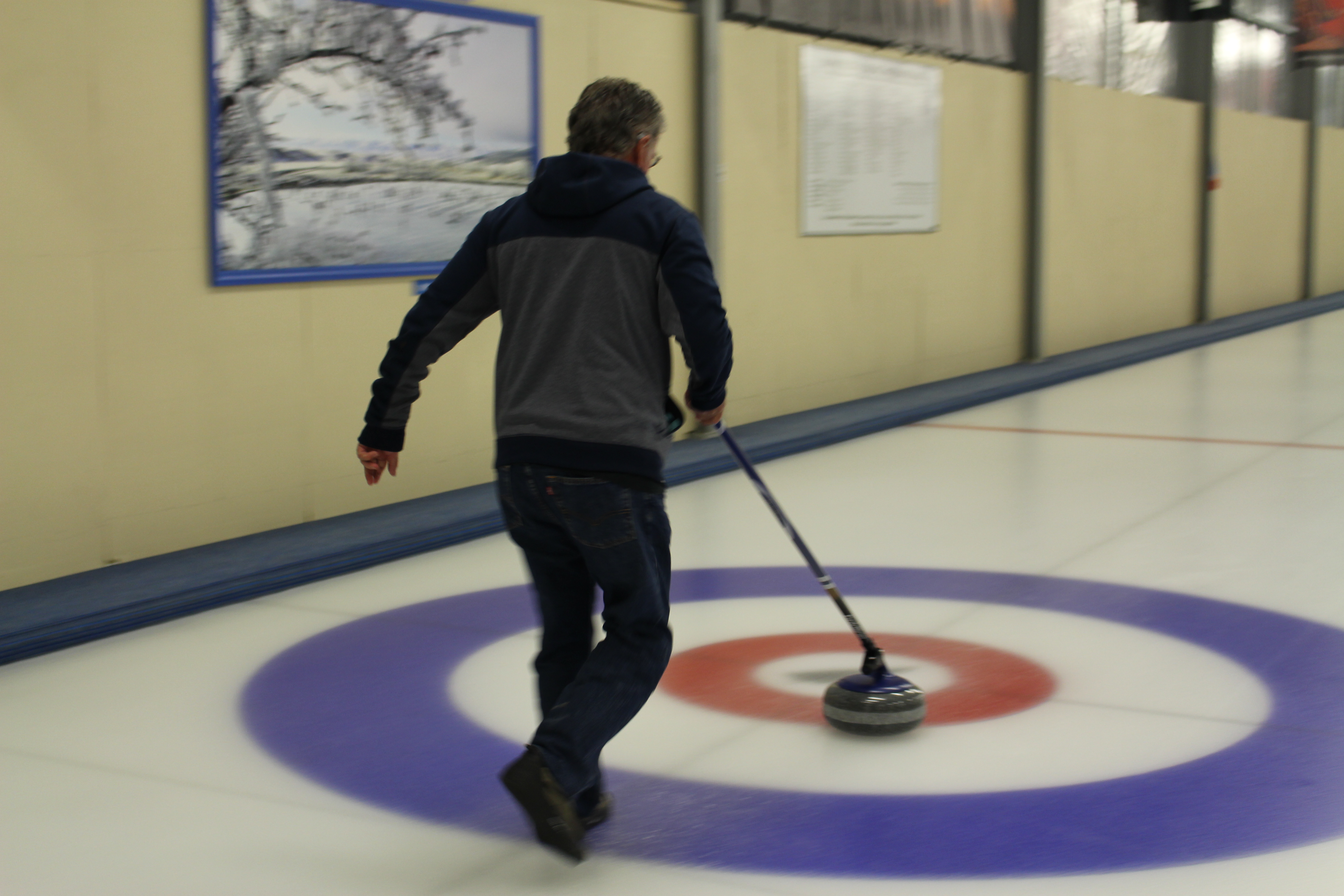
Indoor Curling Rink in Naseby

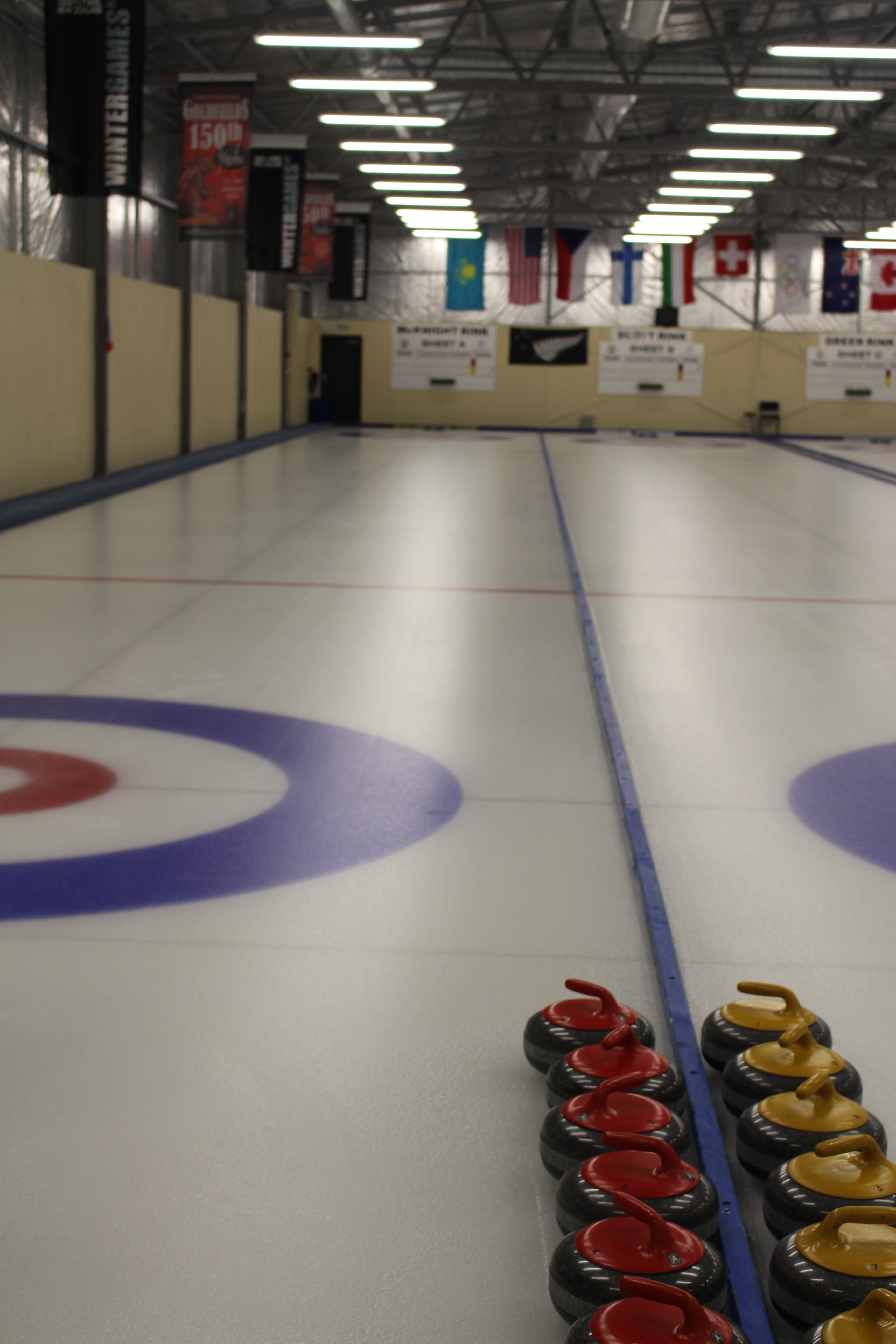
Curling is the winter olympic sport that inspires both fascination and ridicule. Naseby in Central Otago boasts the only Olympic standard indoor curling rink in the southern hemisphere.

Why you may ask? Because Central Otago was settled by Scottish immigrants in the 1840s and they brought their curling stones and love of the sport with them. Most winters the lakes freeze over sufficient to send out the call and assemble teams for a Bonspiel.

The rink provides these rubber covers for your shoes to enable you to walk safely on the ice. No special equipment needed. Dress warmly!

If you book a tour with Off the Rails, Nick ensures that you enjoy an evening lesson and curling session. If you are unassociated with a tour you may book your own session.

The rules of the game are similar to bowls, kube, or bocce ball. You can throw the stone with your arm or you can push it with a stick. Your teammates can use the broom to sweep the ice and encourage your stone to reach the target. Your opponents can use the broom to sweep the ice and keep the stone moving past the target. I joined some other visitors for a lot of practice and a lot of fun.

If your back is stiff or sore, use the stick to push the stone.

Part of History! #WomensMarch 0n Washington

20170121_115557
This young woman embodied the enthusiasm and spirit of the March. Another young woman had a sign that read “What Would Hermoine Do?

It was so thrilling to be part of history. This was the biggest worldwide march for women ever. It came together within just a few months with marches from Antarctica to Stockholm and all across the United States. My son and I went to the Women’s March on Washington, DC. It was the first really big march for either of us.

20170121_111205

We drove from Boston to DC on Friday. It was a very long day due to traffic and weather. My college chum Carole was hosting us and her nephew Cade (who was my other March buddy). We chatted briefly, made plans for the morning and then went to bed.

20170121_105556

With Carole’s local knowledge we were able to get going at 8:30 a.m. and beat the traffic. She went way round to the back of the Capitol and came back in, dropping us a few blocks behind the Supreme Court building. People were already streaming from everywhere–with pussyhats. So many pink hats!

20170121_104338
We were packed in tighter and tighter. Everyone stayed positive, but after about 4 hours we needed to find an edge of the crowd.

We joined the throngs and walked toward the Capitol. Cade has worked for an Illinois Senator one year, so he knew his way around. Really though, you just had to follow the masses. Like everyone else we collected signs, button, and stickers, and took pictures of so many clever signs.

20170121_095844

We walked past the inauguration infrastructure as it was being broken down. We kept expecting to have to go past some sort of security check. None. We never saw any police presence the entire day. They made no arrests at any of the dozens of Marches. The mood was good natured and even joyful at times.

The main stage was on Independence and because of the 500,000 participants we couldn’t get any closer than the Mall. Since none of us could hear the official program, people got creative and started their own chants. The most common was “This is what democracy looks like.” After 4 hours of crowd jostling I was hoping that Democracy might have a little more elbow room.

20170121_101511

We began to make our way across the Mall and up 4th Street. This took another hour. More and more marchers were arriving to replace the small stream that were heading to the sides. So many marchers filled the area that it shut streets down for blocks. There was a festival atmosphere everywhere we went.

20170121_125746

We noticed that some of the more expensive restaurants were closed for private inauguration parties, but we saw very few Trump supporters or school groups. We were getting peckish and Cade had been telling Tevis about District Taco, so I knew we’d end up there for lunch. It is delicious. My only suggestion is to add more seating!

The Metro became more and more crowded as the day wore on. We hopped on the red line to go to our friend Gary’s house and watch the speakers and music on CSPAN. We caught the end and then marveled at the many other marches around the USA–especially San Francisco. Beautiful.

The day held such a positive spirit. I still cannot get enough Facebook shares from family and friends who attended marches in Oakland, Sacramento (my grandson!), San Francisco, San Diego, Boston and my friend Mexicali Cindy who helped organize the very first March of the day in Auckland, New Zealand. Right on!

This is just the beginning of the Resisterhood!