

Greensboro, Alabama is practically unknown to people outside of this part of Alabama. When you tell someone you are going to Greensboro—even people in Birmingham—they assume North Carolina. Nonetheless, Greensboro is worth a visit for the SafeHouse Black History Museum.

I had called ahead over a week in advance. It took a little phone tag before I was able to confirm meeting up at 10:00 a.m. The volunteers who help Theresa Burroughs maintain the museum are a mix of locals and people who grew up in Greensboro, had careers in larger cities and other parts of the US and are now retired close enough to drive to Greensboro and open up the museum for 3 women from California.

The museum is a gem. The Rural Studio helped to design the exhibits and this house museum hits above its weight. There is a video where Theresa Burroughs tells her story as an young woman drawn to activism. She marched, was arrested, and organized her community. In the 1960s, Greensboro was the home to a sewing factory in the black side of town and many more people lived in the community. The downtown business district was bustling and boycotts of businesses by the African American community struck an economic below and created fear amongst the white residents. The exhibits and talking to the docents really brings the sense of what it was like in a small rural town during the civil rights movement. The main focus of the museum is one particularly fraught incident involving Rev. Martin Luther King, Jr. and the Klu Klux Klan. I won’t give anything away except to say it is worth making the side trip.




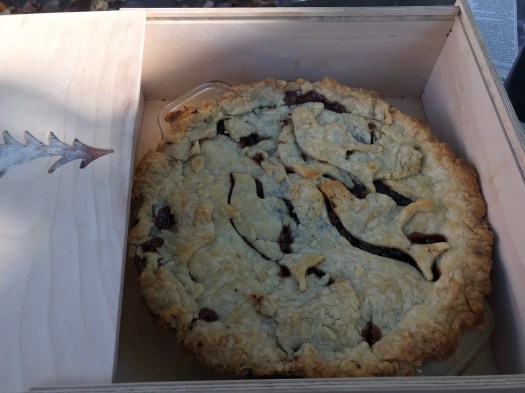


 For the tarts I used Nigella Lawson’s crust recipe. I don’t have a photo of the mince tarts but so far everyone has been enthusiastic (and they disappeared quickly). Several people commented that the tarts are just the right balance between the mince and crust.


 My son has an apartment with a beautiful view from the 15th floor in a building that is in the neighborhood called “Ink Blot” that is part of the South End of Boston. It is a great place to stay because it is easy to catch the T and visit other parts of Boston and it a great neighborhood to mooch around.




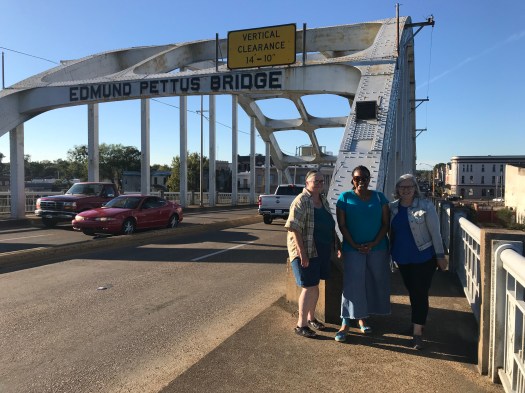 We were able to walk across the Edmund Pettus Bridge and imagine what it must have been like to reach the peak of the bridge, high above the Alabama River, and face a sea of mounted police and police cars with blue lights flashing. I was energized by a group of high school students who started their walk with us but quickly outstripped us. We’d see them again at Brown Chapel. We also spoke with some fellow travelers—a group of friends from Texas and New York–who met up in Alabama. They recommended we also see the Old Live Oak Cemetery.

 The contrast of the large lawns and stately homes near the cemetery with the George Washington Carver apartment complex across the Brown Chapel AME Church is stark. We pulled up to the church as the high school students were leaving and Chantay spotted the church pastor. She spoke to him and enjoyed a tour of the sanctuary while Phyllis and I admired the Martin Luther King, Jr. monument. The pastor was very generous with his time and gave Chantay commemorative key chains to share with us.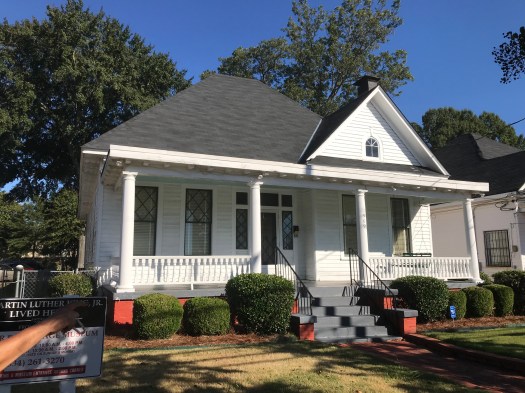

 americanjulie.com